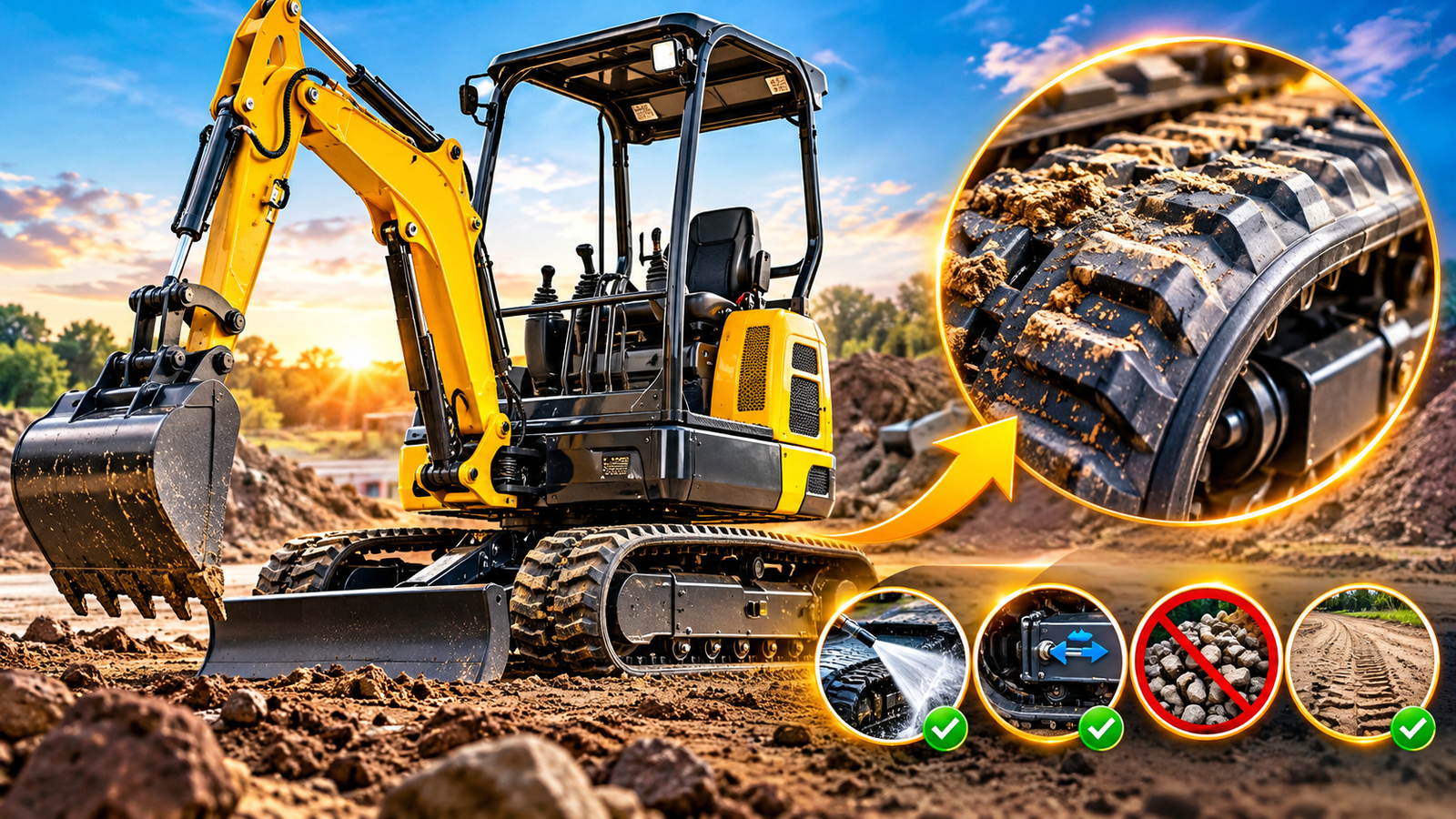
How to Extend the Lifespan of Mini Excavator Rubber Tracks
If you ask anyone who runs compact digging gear on a commercial job site, they will tell you straight: rubber tracks give you unmatched flotation, protect delicate paved asphalt, and keep your operators productive throughout long shifts. Today let’s learn the lifespan of mini excavator rubber tracks.
But ask the fleet manager who pays the maintenance invoices, and you get the rest of the financial story. Undercarriage wear quietly swallows up nearly half of everything you will spend keeping tracked machines running over their working lifecycle.
Whether you operate full-sized earthmovers or compact units, sourcing dependable equipment from dedicated dealers like MachineryAsia is only step one. When looking through an inventory of mini excavators or browsing a new mini excavator for sale, true long-term profitability hinges entirely on how you treat that rubber undercarriage after delivery.
Modern continuous rubber tracks may look like solid bands of tread compound, but beneath the surface sits a sophisticated composite structure of forged steel drive links, guide teeth, and helically wound steel tension cords.
When fine gravel wedges into the roller assemblies, or when an aggressive operator scrubs the machine sideways over sharp concrete curbs, that internal structural assembly starts deteriorating fast.
Heavy-duty excavators depend on structural balance across every link. Mismanage your undercarriage, and you will chew through a set of tracks in under 700 hours. Maintain them with discipline, and you can comfortably push your mini excavator track life beyond 1,800 to 2,000 working hours.
The following field-tested guide covers the essential maintenance protocols, operating techniques, and equipment care strategies you need to maximize track longevity.
Top lifespan of mini excavator rubber tracks
1. Master Proper Track Tensioning to Avoid Premature Failure
Track tension is never a set-it-and-forget-it maintenance item that you check once during a routine engine oil change. Soil conditions change, ambient temperatures fluctuate, and rubber naturally stretches under hydraulic drive loads.
When tracks are pumped excessively tight, you place enormous mechanical stress on the continuous internal steel cords, drive sprockets, and idler wheel bearings. This excessive strain accelerates tooth wear, cooks roller seals, and causes stress fractures along the rubber carcass.
On the other hand, operating with loose, sagging tracks leads straight to “ratcheting”—where drive sprocket teeth jump over the internal rubber guide lugs—stripping rubber lugs clean off the carcass and throwing tracks off the undercarriage frame during slope operations.
Checking track tension must become a structured field ritual performed every 50 working hours, or right after moving the machine into heavy, clinging clay. To inspect sag accurately, suspend one track completely off the ground by lowering the front dozer blade and pressing the excavator arm down until the undercarriage hangs clean in the air.
Clear out mud chunks around the roller path, then measure the clearance gap between the bottom surface of the middle track roller and the top inner face of the rubber track. Compare this measurement directly against your manufacturer’s manual.
If the track hangs too low, inject fresh multi-purpose grease into the tensioning cylinder valve; if it is strung too tight, loosen the relief valve fitting half a turn to discharge grease until the track sag sits within factory tolerances.
- Check sag on a suspended undercarriage: Always elevate the track frame using the dozer blade and bucket to measure true center-roller sag without machine weight skewing the measurement.
- Compensate for soil packing inside the frame: Sticky clay and gravel pack tightly inside the roller tracks and artificially over-tighten the rubber—bleed grease from the adjuster valve if the undercarriage is choking on heavy clay.
- Inspect the tension grease relief valve for leakage: Confirm that the grease zerk and pressure valve seal cleanly without weeping grease under load, which causes tracks to slowly lose tension during tough digging cycles.
2. Implement Daily Undercarriage Cleaning and Debris Removal
It is always tempting for operators to shut down the diesel engine at the end of a shift and leave the clean-up for another day. However, leaving wet soil, gravel, and sticky slurry packed around your undercarriage components is the fastest way to destroy track seals and seize rollers.
Soil particles and crushed aggregates turn into an abrasive grinding compound the moment your machine starts tracking across the site. As the tracks spin, trapped debris grinds continuously against the track guides, roller flanges, and drive motor hubs, gouging deep cuts into the flexible rubber base.
When packed dirt is left to cure under direct heat or freeze solid overnight, it creates an immovable, rock-like barrier inside the frame. The next morning, when the operator engages the two-speed travel pedals, the frozen bottom rollers cannot turn.
The rubber track drags across stationary steel wheels, scrubbing flat spots onto the rollers and searing the underside of the rubber track bed. Spending ten minutes at the end of every workday with a scraping bar or a high-pressure wash wand removes abrasive aggregates before they turn into expensive undercarriage repairs.
- Pry out hard-packed clay and rocks before washing: Run a heavy spade or pry bar through the undercarriage frame channels to break up dense clay packs before using water pressure.
- Focus high-pressure spray around drive motors and idlers: Aim the wash wand directly at the pockets behind the rear travel motors and front idler wheels where sharp stones love to lodge.
- Park off bare dirt during freezing weather: Rest your machine overnight on timber planks or rubber mats to prevent damp rubber tracks from freezing solid to the ground surface.
3. Match Machine Attachments and Balance Operating Weight
The specific attachments pinned to your excavator arm have a massive impact on track wear patterns and overall undercarriage balance. Mounting heavy mini excavator attachments—such as hydraulic rock breakers, heavy augers, tilting grading buckets, or heavy demolition thumbs—shifts the operational center of gravity forward.
When an operator tracks across uneven site terrain with a massive mini excavator attachment raised high in the air, the front idler wheels and forward track rollers take on punishing, disproportionate point-loads. This intense downward force accelerates front-roller flange wear and drives track guide teeth violently against the side rails.
Selecting the right attachment configuration for your specific compact machine preserves structural undercarriage balance while protecting hydraulic efficiency. Always balance heavy working loads by keeping your tool carried low to the ground during transit, no higher than knee level.
If you are operating hydraulic breakers or rippers that generate continuous high-frequency vibration, ensure your tracks sit flat on level, cleared footing. Operating a hydraulic hammer with one track propped up on a concrete curb concentrates thousands of vibrations straight into the rubber track carcass, tearing the vulcanized bond holding the internal steel cords together.
- Carry heavy attachments low during site transit: Keep heavy buckets, breakers, and augers positioned close to the ground while traveling to stabilize the machine’s center of gravity and distribute weight evenly across all lower rollers.
- Seat tracks on flat grade before operating vibratory tools: Ensure both track shoes rest fully supported on level soil before hammering rock or concrete to prevent localized vibration damage to track drive lugs.
- Match tool weight to machine capacity: Never overload your compact arm with oversized attachments that cause the rear counterweight to tip, which repeatedly slams the front track rollers into the rubber guides.
4. Refine Operating Habits to Eliminate Unnecessary Track Wear
Operator technique plays a decisive role in whether your mini excavator tracks reach their maximum expected lifespan or end up torn to shreds within a few hundred hours. Sharp counter-rotations, continuous spin turns, and sloppy steering maneuvers tear flexible rubber apart.
When an operator spins a tracked machine around in place on asphalt, abrasive granite, or sharp concrete, the tracks counter-rotate against each other, forcing outer rubber tread blocks to scrub sideways. This torsional shear peels lugs from the carcass, strips internal guide teeth, and exposes structural steel cords to moisture.
Skilled operators use wide, sweeping turns instead of locking one track and spinning around it. When maneuvering across hard ground, make gentle three-point turns by driving forward in an arc, reversing slightly, and completing the repositioning smoothly.
Limit long-distance high-speed tracking; high-speed travel modes generate friction heat within the rubber compound that degrades internal adhesion. When navigating unavoidable curbs, logs, or concrete steps, always approach them squarely at a 90-degree angle rather than clipping them diagonally, which twists track sidewalls off the front idler guide wheel.
- Execute sweeping three-point turns on hard surfaces: Steer using gentle forward and reverse arcs instead of spinning on a dime to prevent tread tearing on concrete or asphalt.
- Cross curbs and hard steps perpendicular at 90 degrees: Drive squarely over raised obstacles so both track rails absorb the climb evenly without prying the track sidewall off the idler hub.
- Limit high-speed travel mode over long haul distances: Reserve high-speed rabbit travel exclusively for clean, level haul paths, using low-speed turtle mode for standard digging, grading, and positioning.
5. Terrain Management and Job-Site Ground Protection
Rubber tracks excel when working on residential turf, sandy soils, wet mud, and finished parking lots where steel grousers would tear the ground to shreds. However, deploying rubber-tracked machinery onto harsh demolition grounds filled with rebar fragments, jagged concrete chunks, broken glass, and crushed granite introduces severe puncture hazards.
Deep cuts that penetrate the protective outer rubber tread expose the internal steel cords to groundwater and corrosive site minerals, causing the steel bands to rust and snap unexpectedly during heavy lifts.
Proactive site management saves thousands in preventable track damage. Take five minutes before moving equipment to clear major travel paths of scrap metal, demolition rubble, and sharp rocks using the front dozer blade or clean-up bucket.
If you have to traverse deep mud, marshy soil, or rough broken stone, lay down heavy-duty composite ground protection mats or timber swamp pads. Spreading the machine’s operating weight protects the undercarriage from bottoming out against hidden debris submerged beneath standing mud.
- Blade travel paths clear before hauling material: Use your excavator bucket or dozer blade to sweep sharp rocks, rebar, and scrap metal out of your primary haul corridors.
- Deploy ground protection mats over rough surfaces: Lay down heavy composite ground mats when traversing jagged demolition waste or soft mud to shield rubber treads from punctures.
- Keep undercarriage frames level while trenching: Avoid digging with one track perched high on an excavated dirt bank, which concentrates crushing torsional weight onto the lower track guides.
6. Synchronize Undercarriage Component Maintenance
Rubber tracks do not operate as an isolated component; they function as part of an integrated mechanical powertrain with the drive sprocket, front idler, top carrier rollers, and bottom track rollers.
When sprockets wear down until their teeth resemble thin, pointed shark fins, those hooked teeth no longer mesh cleanly with the track’s drive links. Instead, they grab, pinch, and gouge the vulcanized internal drive lugs, ripping them clean off the track core. Slapping a brand-new set of rubber tracks onto worn-out, hooked sprockets will destroy the new track links within weeks.
Undercarriage inspections must be performed methodically during weekly fleet walkarounds. Elevate the track frame and spin every lower roller by hand to verify that bearings turn freely without binding, excessive end-play, or grease seal leaks.
Any roller that seizes must be replaced immediately before it scrubs flat spots into the casing and burns through the rubber track guide rail. Keeping the drive train aligned ensures smooth transfer of power across the entire undercarriage system.
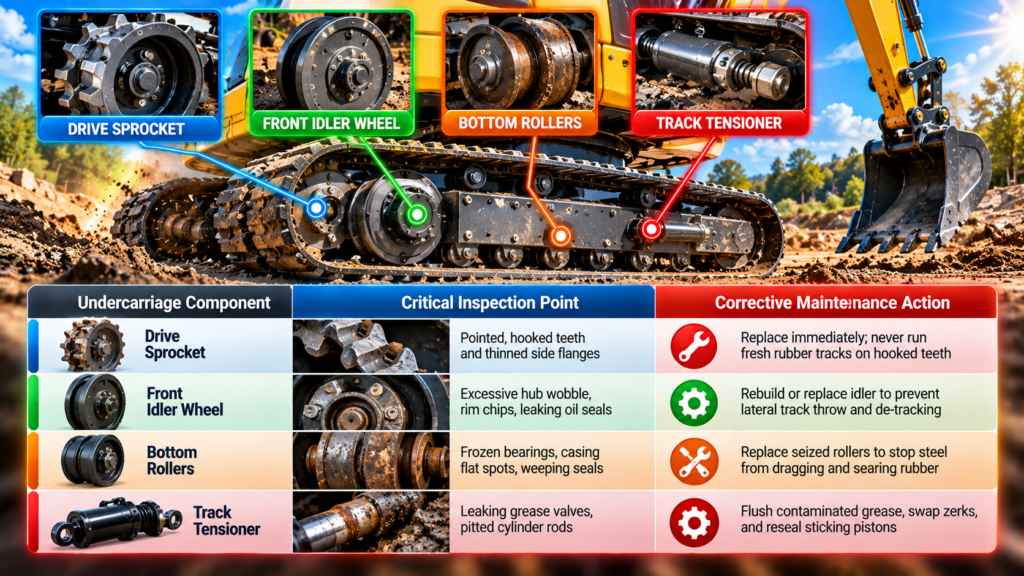
Table: Mini Excavator Rubber Tracks
| Undercarriage Component | Critical Inspection Point | Corrective Maintenance Action |
| Drive Sprocket | Pointed, hooked teeth and thinned side flanges | Replace immediately; never run fresh rubber tracks on hooked teeth |
| Front Idler Wheel | Excessive hub wobble, rim chips, leaking oil seals | Rebuild or replace idler to prevent lateral track throw and de-tracking |
| Bottom Rollers | Frozen bearings, casing flat spots, weeping seals | Replace seized rollers to stop steel from dragging and searing rubber |
| Track Tensioner | Leaking grease valves, pitted cylinder rods | Flush contaminated grease, swap zerks, and reseal sticking pistons |
- Spin bottom rollers manually during weekly checks: Lift the track off the ground and hand-spin each roller to identify frozen bearings before they scrub flat spots into the casing.
- Replace drive sprockets when installing new tracks: Always swap out worn sprockets at the same time as new tracks to ensure pitch geometry matches and prevents drive lug tearing.
- Monitor front idler alignment and lateral play: Check the idler guide brackets for excessive side-to-side slop to ensure tracks remain tracking straight down the center line.
7. Prevent Chemical Degradation and Manage Seasonal Storage
Vulcanized rubber is an organic polymer composite that remains vulnerable to chemical contamination and intense ultraviolet exposure. Daily job-site fluids—including diesel fuel, engine oil, hydraulic fluid, battery acid, and chemical degreasers—act as active solvents against rubber track compounds.
When hydraulic hoses under the boom seep oil onto track treads and remain uncleaned, the petroleum softens the rubber matrix, leading to bubbling, blistering, delamination, and sudden structural failure. Fix hydraulic drips immediately and wash down affected rubber with clean water and mild detergent.
Machine storage during seasonal downtime also impacts track longevity. Leaving an excavator parked outdoors under baking summer sunlight accelerates ultraviolet oxidation, drying out the rubber compound and causing deep dry-rot surface cracks.
When parking machines for extended downtime, wash the undercarriage thoroughly, loosen track tension slightly to relieve constant stress on internal steel cords, and park the unit indoors on dry timber planks away from standing puddles. If outdoor storage is unavoidable, cover the tracks with breathable canvas tarps to block direct UV exposure.
- Wash away petroleum spills immediately: Clean diesel, engine oil, and hydraulic fluid off rubber surfaces right away using mild soap and water before rubber softening starts.
- Cover rubber tracks during long-term outdoor storage: Shelter tracks from harsh ultraviolet rays with opaque, breathable tarps to prevent dry rot and sidewall ozone cracking.
- Relieve tension cylinder pressure for extended downtime: Bleed a small amount of grease from tension cylinders if the machine will sit parked for more than a month to relax the steel cords.
FAQs on Mini Excavator Rubber Tracks
How long do rubber tracks typically last on a mini excavator?
Under standard working conditions, rubber tracks last between 1,200 and 1,600 operating hours. When operating on soft loam, turf, and sand with disciplined track tensioning and daily washdowns, usable life can easily exceed 2,000 hours. Conversely, working constantly on jagged demolition concrete, broken scrap metal, or rough asphalt without regular maintenance can ruin tracks in under 600 hours.
How do I know when my excavator’s rubber tracks need replacement?
You should replace mini excavator rubber tracks when you see exposed internal steel cables, missing drive lugs, deep lateral cracks extending past 60% of the rubber thickness, or persistent de-tracking. If the internal continuous steel belt snaps, the track will separate completely, disabling the machine on the job site. Regular visual inspections catch structural cracks before complete breakage occurs.
What causes mini excavator rubber tracks to come off (de-track)?
De-tracking happens primarily when tracks run too loose, giving the guide teeth enough room to hop out of the roller channel. Common triggers include making sharp pivot turns on uneven slopes, working with a worn-out front idler, or backing diagonally over large curbs and rocks that wedge between the track and the frame.
Can you repair a cut or torn excavator rubber track?
Shallow surface cuts on the outer tread that do not reach the internal steel cords can be left alone or filled with vulcanizing rubber repair compound to keep grit out. However, if a deep tear exposes the internal steel cables, moisture will rapidly corrode the steel cords, causing them to snap under tension. Severed structural cords cannot be spliced back together, and the track must be replaced.
What is the correct way to measure rubber track tension?
Elevate one side of the machine off the ground using the front dozer blade and excavator bucket so the track hangs freely. Measure the vertical sag between the bottom edge of the center track roller and the top inner face of the rubber track. This measurement usually falls between 10 mm and 20 mm (approximately 0.5 to 0.75 inches), but always verify exact tolerances in your machine manual.
Are rubber tracks better than steel tracks for excavators?
Rubber tracks are the superior choice for landscaping, residential utility trenching, and urban street work because they do not destroy concrete pavements, crack curbs, or tear up delicate lawns. Steel tracks are better suited for heavy demolition sites, rock quarries, and dense forestry where sharp steel scrap and jagged boulders would cut through rubber compounds.
Should I replace excavator rubber tracks in pairs or individually?
You should always replace rubber tracks in pairs. Running a brand-new track alongside a worn track creates a diameter mismatch that causes the machine to drift to one side during travel. This uneven tracking forces the operator to constantly correct steering, placing unequal torque on hydraulic drive motors and accelerating sprocket wear on the newer track.