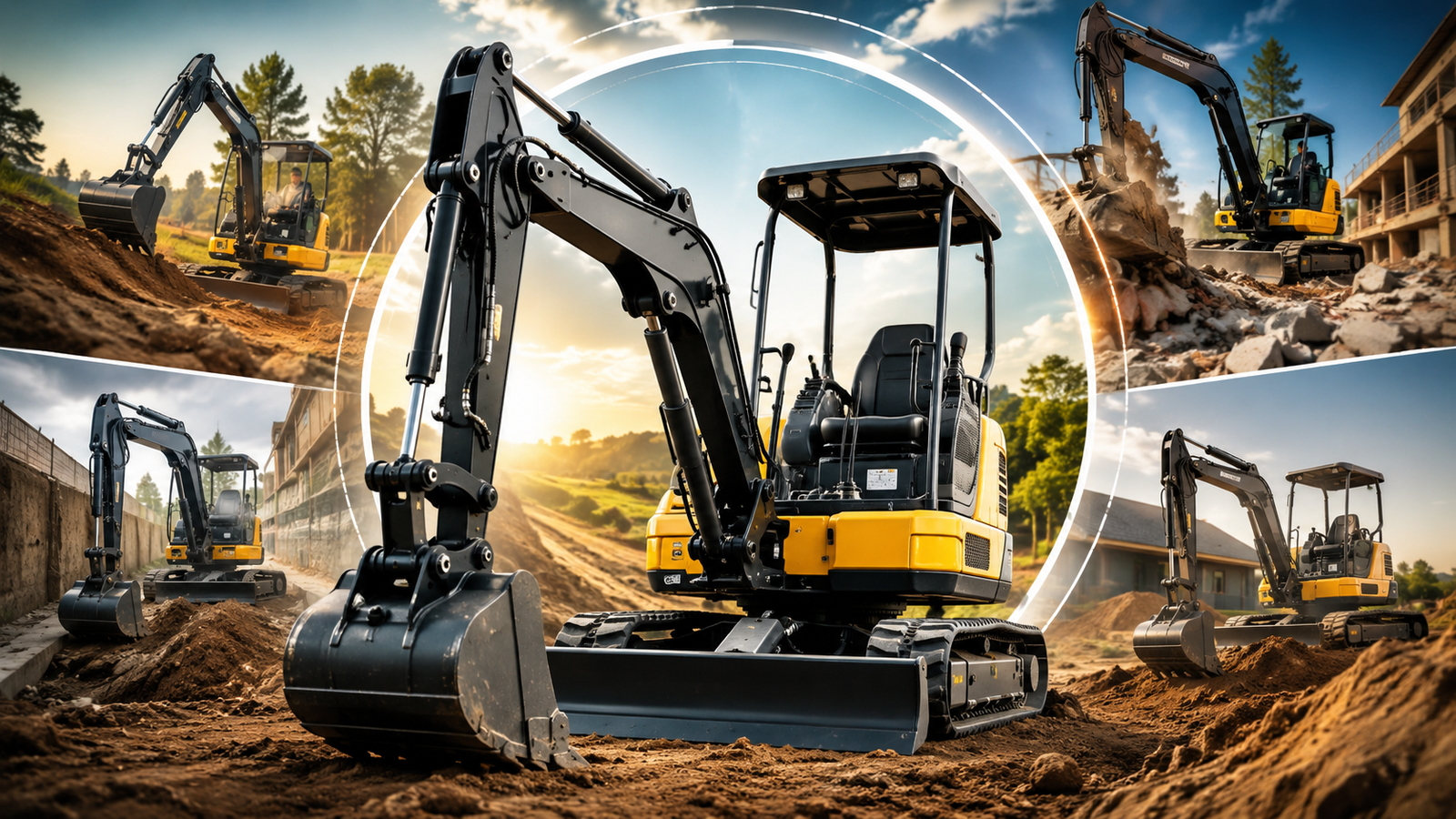
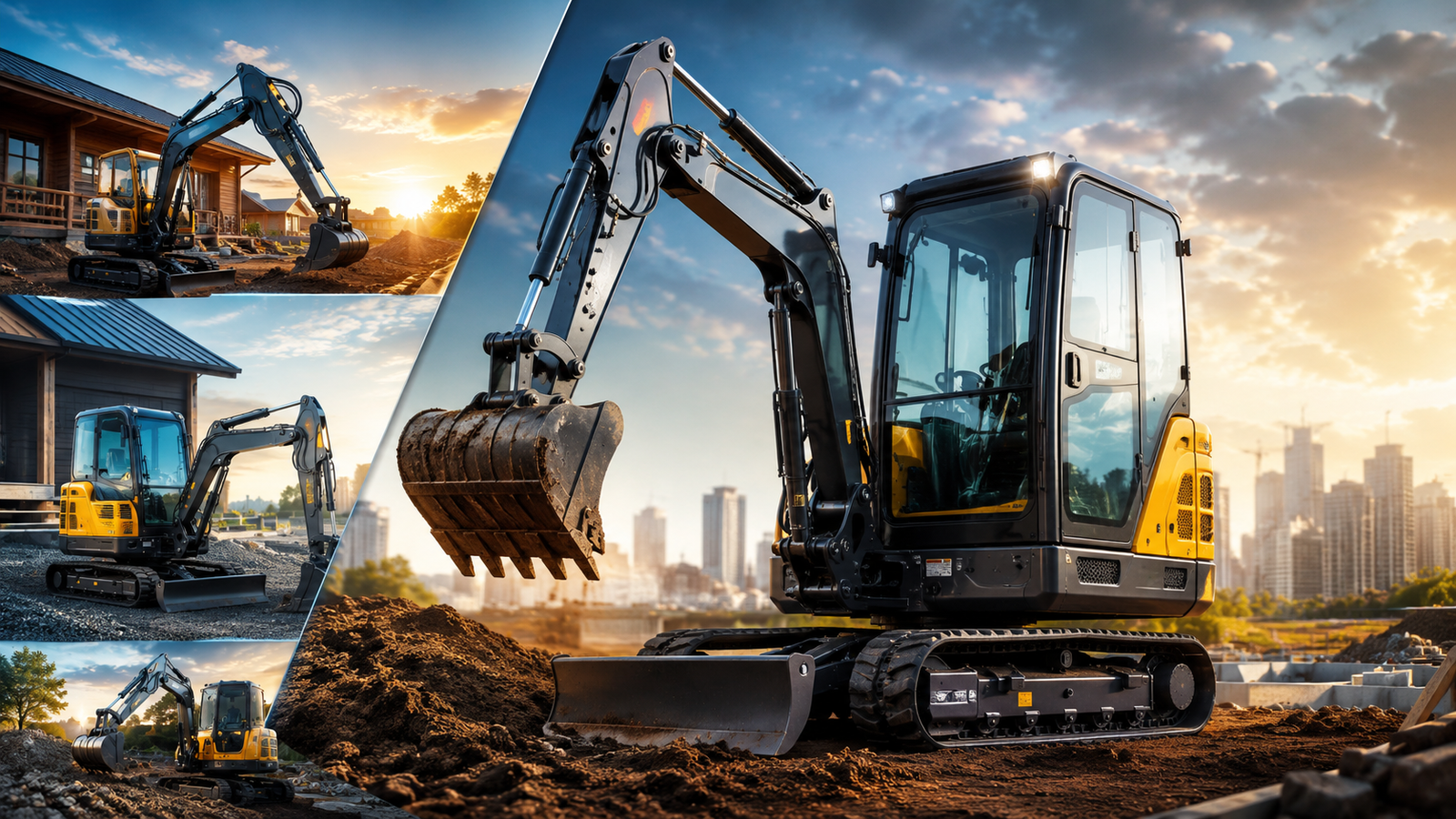
Best Compact Excavators for Small Businesses in 2026
If your small business is engaged in landscaping, utility contracting, or residential construction, one of the main ways to stay ahead in your field is to buy equipment which contributes the most to production while giving minimum expenditure of your capital. In congested urban areas where labor payment is also rising, small businesses can hardly depend on raw manual work or large fuel-consuming machines only. One of the most intelligent decisions to accelerate business growth, maintain profit margins and also manage tight schedule deadlines accurately is to get the best compact excavators that 2026 will offer.
Getting suitable machinery involves a tradeoff between initial investment and long-term operational efficiency. Thanks to modern tight-radius designs, compact earthmoving machines of today generate as much breakout force as mid-size models of the past that could, however, only be barely, towed by a heavy-duty pickup truck.
Here is an all-inclusive guide which presents the main micro and mini excavator machines for this year helping your small business select the perfect equipment for your current and future project requirements.
The Rising Demand for Compact Excavator for Earthmoving in 2026
The commercial construction and landscaping landscapes have changed dramatically over the last few seasons. Properties have become smaller, so heavy equipment must be highly maneuverable to get through a backyard gate without breaking the lawn or driveway. Small business owners are increasingly looking at compact, high-performance machinery that keeps their costs down while allowing for fast production pace.
In the search for best compact excavators 2026, people in charge look for such machines which have a small physical presence but a very high hydraulic flow. Engine technologies like the well-known
Kubota diesel series which is extremely powerful and efficient, ensures the stability of the output power while meeting the stringent regulations for pollutant emissions. These micro and mini excavators are becoming the method of replacement for large workforces with different activities such as trenching at a great depth or concrete demolition in a safe and effective manner.
- Urban Accessibility: The retractable undercarriage of machines weighing below two tons enables operators to reduce their track width so that they can easily pass through backyard gates and narrow alleys.
- Minimal Site Damage: The light tracks made of rubber help in distributing the whole weight of the machine uniformly, which in turn drastically reduces the damages to the ground and scarring of driveways which are major drawbacks with heavy wheeled alternatives.
- Lowest Initial Cost: By going for the very nimble but high-utility pieces of equipment, the contractors who are new to the sector can stay away from the huge initial acquisition and financing costs which are the pain points of the traditional full-sized industrial crawlers.
Key Evaluation Criteria for Small Business Fleets
Deciding to invest your capital in a new fleet asset is a big step and you need to think even beyond the first price shown on the label. To identify which among the best compact excavators 2026 will suit your particular workflow the most you will need to take into account how deep you usually dig, site arrangements, and your attachment requirements. If you pick a model that is too light it will be a real pain to operate it in heavy clay whereas if you get an oversized one then the consequence will be high fuel cost and transportation problems on an ongoing basis.
Anyone who owns a business should really care about the total cost of ownership (TCO). The vehicles that they acquire should be the ones that can be transported safely without having to obtain a commercial driver’s license (CDL). Also, it is highly important that the machines be auxiliary hydraulic capable as it means that the excavator really can work like a multi-tool and run different kinds of special attachments.
One should also not forget checking the engine layouts and the service access panels so that the team’s daily maintenance can be done with no difficulty letting the downtime be kept at a minimum.
- Maximum Dig Depth and Reach: It is very important to ensure that the length of the boom and the stick go well with your primary task, for example, whether you are doing shallow utility work or deep residential foundation footings, you need to be sure of your reach capabilities.
- Auxiliary Hydraulic Flow (GPM): To run heavy-duty attachments like post-hole augers, log grapples, and hydraulic rock breakers efficiently, it is essential to have a high continuous gallon per minute (GPM) hydraulic flow.
- Transportation Requirements: Toom a machine with all its components and operating weight does not exceed 10,000 pounds, a standard noncommercial heavy-duty trailer and truck can be used for transportation without any legal issues.
Top Contenders: The Best Compact Excavators 2026 for Every Budget
Looking at the market for equipment, you can see that there are a lot of options but a handful of those are favorites of small business owners this year. The prime reason they back TYPHON Machinery commercial line, which can be found on Machinery Asia is that these products are not only sturdy but inexpensive as well. They provide small businesses with up to 70-80% of the premium features found on major well-known industrial brands at a much lower price, which is a big plus for rapid ROI figures.
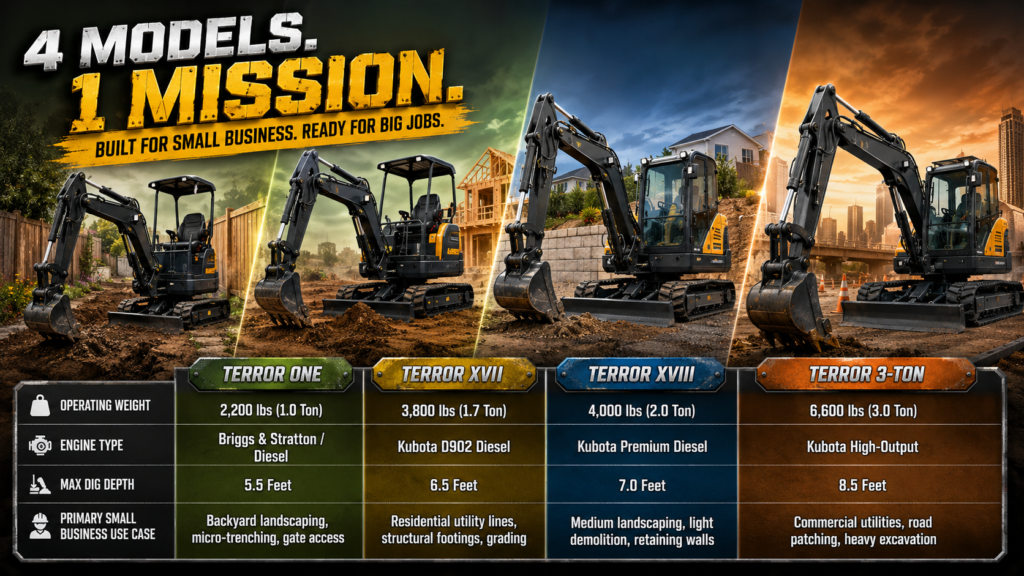
For micro units such as TYPHON TERROR ONE STORM, the size is so compact that the human canopy providing reliable protection can be an added feature. The phases have turned out to be very effective in the last two decades that now even the smallest of our models (with a 1.8-ton to 2.0-ton weight range) are powered by the bullet-proof Kubota D902 diesel engines capable of handling heavy excavation cycles. These products come with heavy-duty tracks, robust boom swings besides the ergonomic ones with hydraulic joysticks aimed at reducing operator fatigue after prolonged work hours on the site.
- TYPHON TERROR ONE STORM: This is an extremely compact 1-ton trench digger built specifically for working in tight garden entries, with a strong canopy and integrated thumb clip.
- TYPHON TERROR XVII & XVIII: These are very nimble, 3,800 to 4,000 lb models fueled by Kubota diesel engines, perfect for plumbing trenches and grading of properties.
- TYPHON TERROR 3 Ton: A hardy, zero-tail swing commercial heavy-duty machine that handles a wide variety of heavy utility tasks and demolitions without creating a cramped-space dilemma.
Technical Comparison of Leading 2026 Compact Excavators
If you want your small business to be independent of external help for choosing the best option from what the top models of 2026 have to offer, you should do a comparative analysis of their specifications. Especially if your core line of business will be the same, you need to ensure that the machine you are going to rely on can physically meet your service delivery requirements. Below is a table presenting important performance and structural data about the TYPHON machines which are popular in the market this year.
Table: Compact Excavators Model Class
| Model Class | Operating Weight | Engine Type | Max Dig Depth | Primary Small Business Use Case |
| TYPHON TERROR ONE | 2,200 lbs (1.0 Ton) | Briggs & Stratton / Diesel | 5.5 Feet | Backyard landscaping, micro-trenching, gate access |
| TYPHON TERROR XVII | 3,800 lbs (1.7 Ton) | Kubota D902 Diesel | 6.5 Feet | Residential utility lines, structural footings, grading |
| TYPHON TERROR XVIII | 4,000 lbs (2.0 Ton) | Kubota Premium Diesel | 7.0 Feet | Medium landscaping, light demolition, retaining walls |
| TYPHON TERROR 3-Ton | 6,600 lbs (3.0 Ton) | Kubota High-Output | 8.5 Feet | Commercial utilities, road patching, heavy excavation |
- Engine Standardization: Having trusted Kubota diesel platforms running in various weight classes ensure the availability of replacement filters and typical maintenance parts.
- Digging Performance Ratio: These compact models’ design combining structural weight and depth allow them to achieve safe deeper reaches without tipping while under load.
- Application Versatility: Stepping up in the weight range enables the contractor to shift from simple residential path digging to intensive commercial municipal trenching easily.
Maximizing ROI with Versatile Mini Excavator Attachments
The capacity of an excavator highly depends on the tool being attached to the end of its arm. If you really want to extract the maximum value out of best compact excavators 2026 small businesses have a great opportunity to do so by acquiring not only a machine but a set of attachments as well.
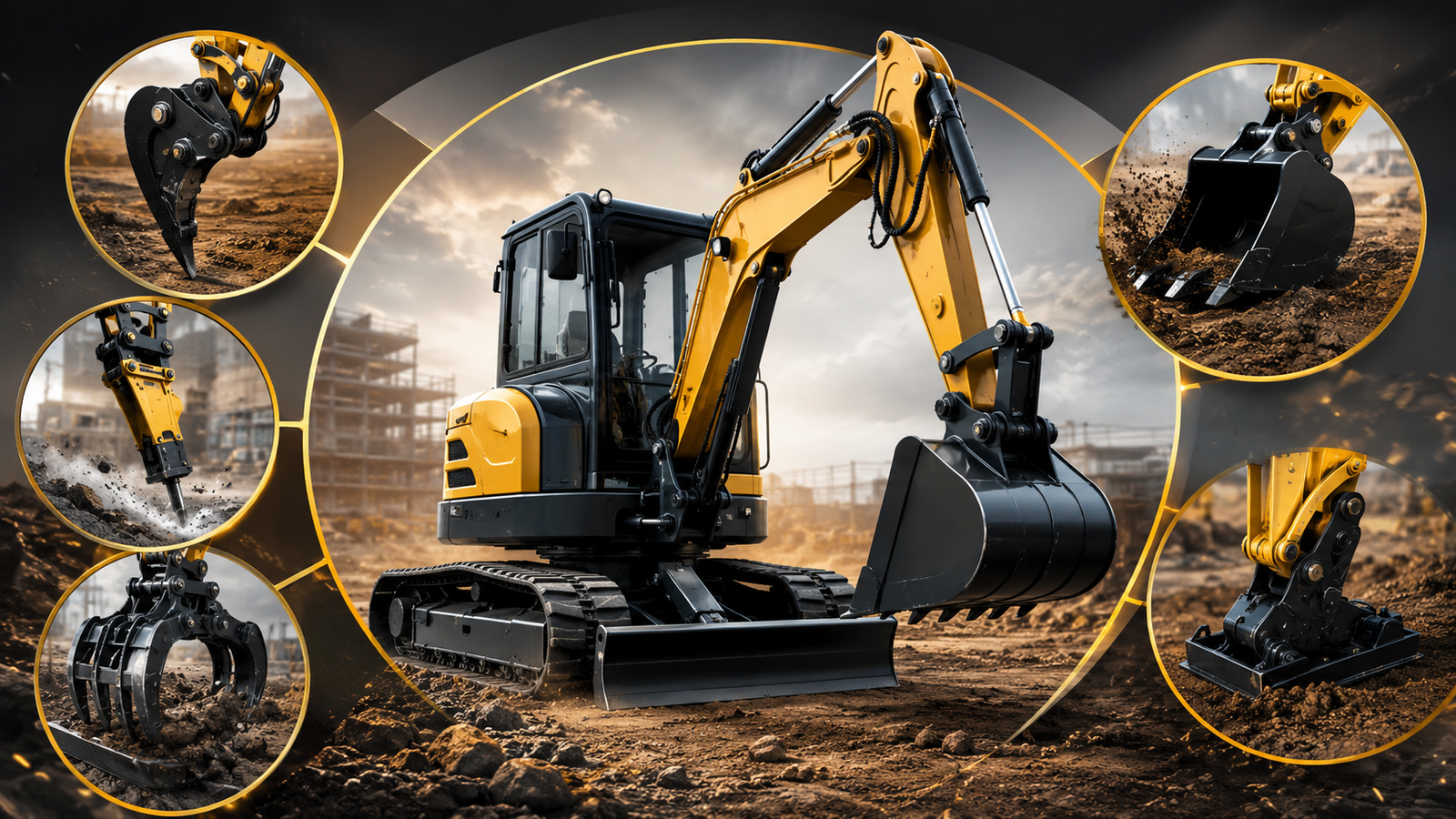
You do not have to buy different machines for various tasks as with one compact unit and a modern quick coupler system you can become a post-hole digger, a demolition hammer and a high-capacity material handler within seconds.
Take a 2-ton model for example, equipping it with a hydraulic thumb will make your operator capable of grabbing and putting down heavy rocks, wood pieces, and debris with great accuracy.
On the other hand, attachments such as earth augers allow for a significant increase in the speed of commercial fencing and tree planting operations. Using such equipment small teams are capable of doing diverse projects which in turn means an increase in monthly revenue without having to add crew members.
- Hydraulic Thumbs: Very useful for attachment of concrete slabs, rocks, and brush removal.
- Earth Auger Drives: You can quickly perform fence post and pier installations by using earth augers which are much more efficient than hand-held ones.
- Hydraulic Rock Breakers: A well-chosen attachment will make your compact excavator a powerful tool for breaking concrete slabs and pool shells.
Maintenance and Operational Tips for Small Businesses
Taking good care of your equipment is largely by doing regular preventative maintenance and the sooner you start the better. Since compact earthmoving machines work in rough environments full of abrasive dust, mud, and high vibrations one cannot afford to skip even the most basic service intervals or components failure could cost a lot. A daily simple inspection list will make sure that your machine is always in working order and the resale value remains high over time.
Follow your operators in greasing all major pivot points at least every ten hours of operation so there is minimum wear of the bushings. Monitor hydraulic fluid for clarity and check track tension on a routine basis to ensure top breakout force throughout your excavator’s service life.
Consider the possibility of keeping the care as a non-negotiable part of your working day as a result you will give yourself a good chance of exceeding the usual 10,000-hour machine lifespan threshold.
- Daily Greasing Routines: Apply grease to the main boom, stick, and bucket pivot points to keep dirt and moisture out.
- Track Tension Tracking: Correct rubber track sag must be maintained to avert derailments and uneven wear of undercarriage.
- Hydraulic System Care: Regularly check hydraulic lines for leaks and replace filters to maintain stable pressures and avoid damage.
Frequently Asked Questions (FAQ)
What is the best mini excavator size for residential work?
Usually, the absolute best size for mini excavators is the range of 1.5 tons to 2.5 tons. Machines in this class provide the ideal mix of a capacity to dig that is sufficient (around 6 to 7 feet) and having some good breakout power. At the same time, they are light enough not to cause much turf damage. Importantly, they are quite small and still nimble enough to get around residential fencing, house foundations, and overhanging trees pretty well.
Can a mini excavator break up concrete?
Of course, provided it is equipped with the right hydraulic breaker or hammer attachment, compact models are particularly effective at light demolition work. With a 2-ton or 3-ton chassis, you can easily break concrete driveways, old patios, and brick retaining walls. Be sure that your excavator’s auxiliary hydraulic flow exactly meets the operating conditions of the breaker attachment to avoid its overheating.
Do I need a license to operate a mini excavator on private land?
Depending on the region, usually, there is no need for a commercial heavy equipment license to operate a compact excavator on private land for agricultural or residential purposes. However, if your small business is working on public commercial sites or near public roads, you must comply with safety regulations or certification tracking may be required. Always check with local authorities and make sure that your personnel are completely aware of machine safety basics.
What is the average life expectancy of a compact excavator?
If you are doing regular and proper preventative maintenance then a top-notch compact excavator should be able to serve you for between 8,000 and 10,000 operational hours. The actual longevity mainly depends on operator behavior, working environment, and how well the hydraulic systems are maintained. Daily greasing of pivot pins and timely sealing of small leaks are the two most effective ways to extend the machine’s life.
What is the difference between a mini excavator and a backhoe?
A mini excavator has a dedicated digging arm which is mounted on a house structure and can rotate a full 360 degrees continuously. To provide stability on soft ground the machine rests on tracks that have great grip. Whereas a backhoe is a wheeled tractor unit which has a front-loading bucket and a rear-facing digging arm; the operator’s seat can swivel 180 degrees. Excavators are highly accurate and efficient in continuous digging under constrained conditions, backhoes are meant for higher speed and moving of materials.
What does “zero-tail swing” mean and why does it matter?
Zero-tail swing implies that, when an excavator’s upper house pivots, the rear counterweight does not project beyond the outer width of the rubber tracks. For small businesses, particularly in urban zones, this design feature is invaluable because it enables operators to turn materials and dump them right next to walls or fences or roadway traffic without the risk of the machine’s rear part hitting any obstacle.
What maintenance is required daily for a compact excavator?
You should start each day with a pre-operation maintenance checklist. This should include checking all working engine fluid levels, looking over the hydraulic hose installation for any visible leakages, and confirming the track tension is correct. Make sure that you take out any mud or rocks stuck inside the undercarriage rollers and grease all the high-friction points like boom, bucket pins etc. Ten minutes each morning for doing these safety checks will keep small problems from becoming major ones.