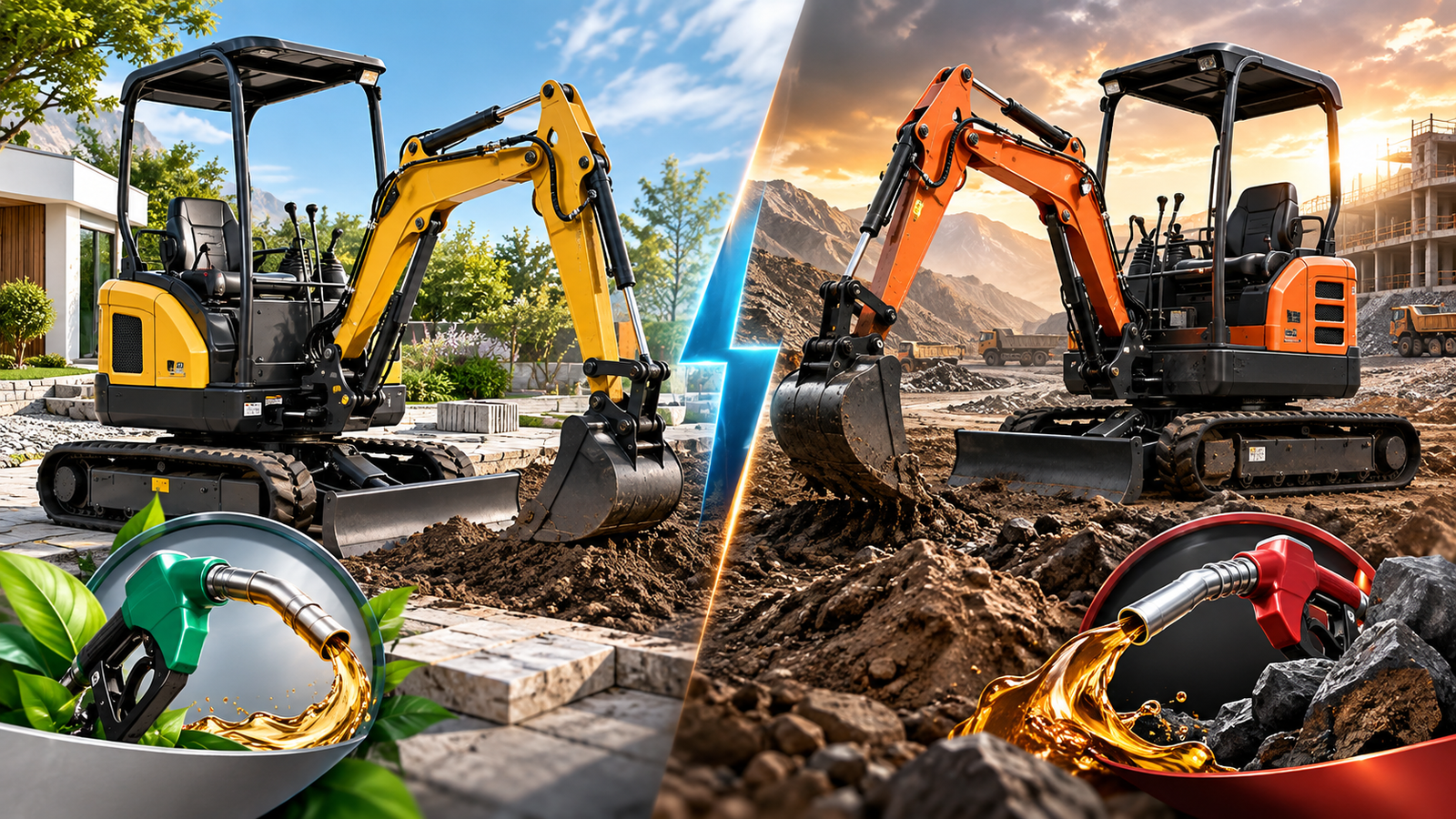
Gas vs. Diesel Mini Excavators: Which TYPHON Model is Right for You?
Walk onto almost any residential renovation, utility job, or backyard landscaping project today, and you will immediately notice something different: massive, lumbering backhoes are being replaced by nimble compact machinery. When you start shopping around for your next workhorse, you will hit a major fork in the road almost immediately: the ongoing contest of Gas vs. Diesel Mini Excavators.
The Big Fuel Debate on Modern Job Sites
It sounds like a basic mechanical question on paper, but in the field, this choice changes everything. The engine under the rear hood dictates how your machine handles thick clay, how many dollars you spend at the pump every Friday, how painful your morning winter routine becomes, and what kind of cash you can recoup when you eventually sell it off.
At MachineryAsia, we talk to contractors, arborists, utility crews, and acreage owners every day who get stuck right at this crossroads. Both setups have clear merits, but they cater to entirely different styles of work.
Choosing the right powerplant means being brutally honest about how you plan to use the machine day in and day out. Are you running a weekend property clean-up crew, digging post holes every other Saturday, and parking the rig in a shed for three weeks straight? Or are you running an excavation outfit where the tracks start turning at 7:00 AM sharp and do not stop until sunset?
Gas vs. Diesel Mini Excavators represent two fundamentally different engineering approaches to moving dirt. Gas gives you low buy-in costs, featherweight transport, and dead-simple mechanics that any backyard DIYer can tinker with. Diesel, meanwhile, gives you brute low-end lugging power, relentless hydraulic flow, and an engine block designed to outlive your truck.
- Your engine choice fundamentally dictates fuel consumption rates, low-end torque output, and cold-weather reliability across different job environments.
- The balance of Gas vs. Diesel Mini Excavators directly impacts your 3-to-5-year total cost of ownership, including scheduled maintenance and resale depreciation.
- Selecting the wrong fuel type often results in either overpaying for heavy commercial power you never touch or frustratingly bogging down a lighter engine on demanding digs.
Why Consider a Gas-Powered TYPHON Mini Excavator?
If you step back a decade or two, the idea of running a gasoline engine in an earthmover sounded like a compromise. Today, that perception is completely outdated, especially in the nimble 1-ton weight class.
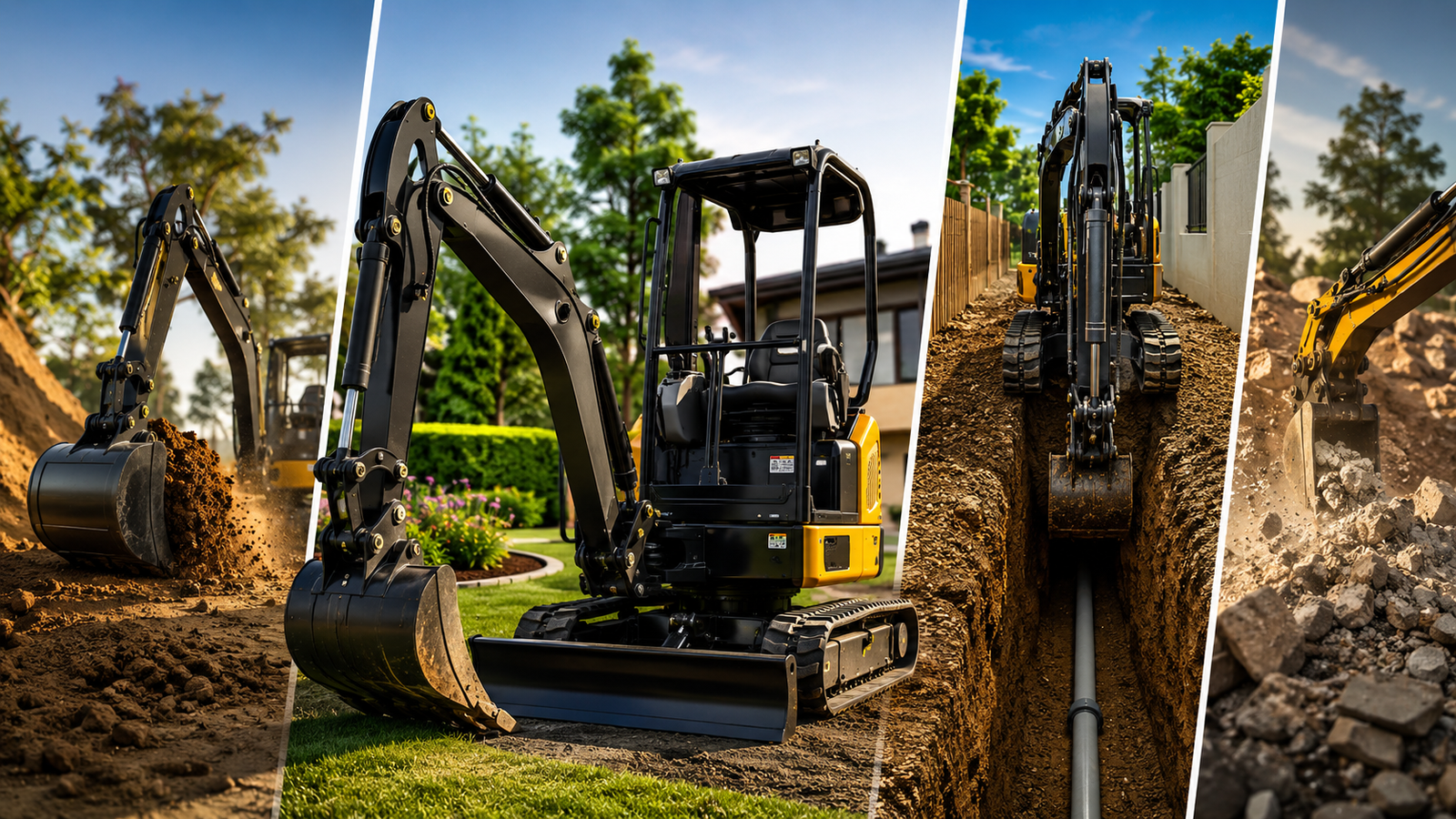
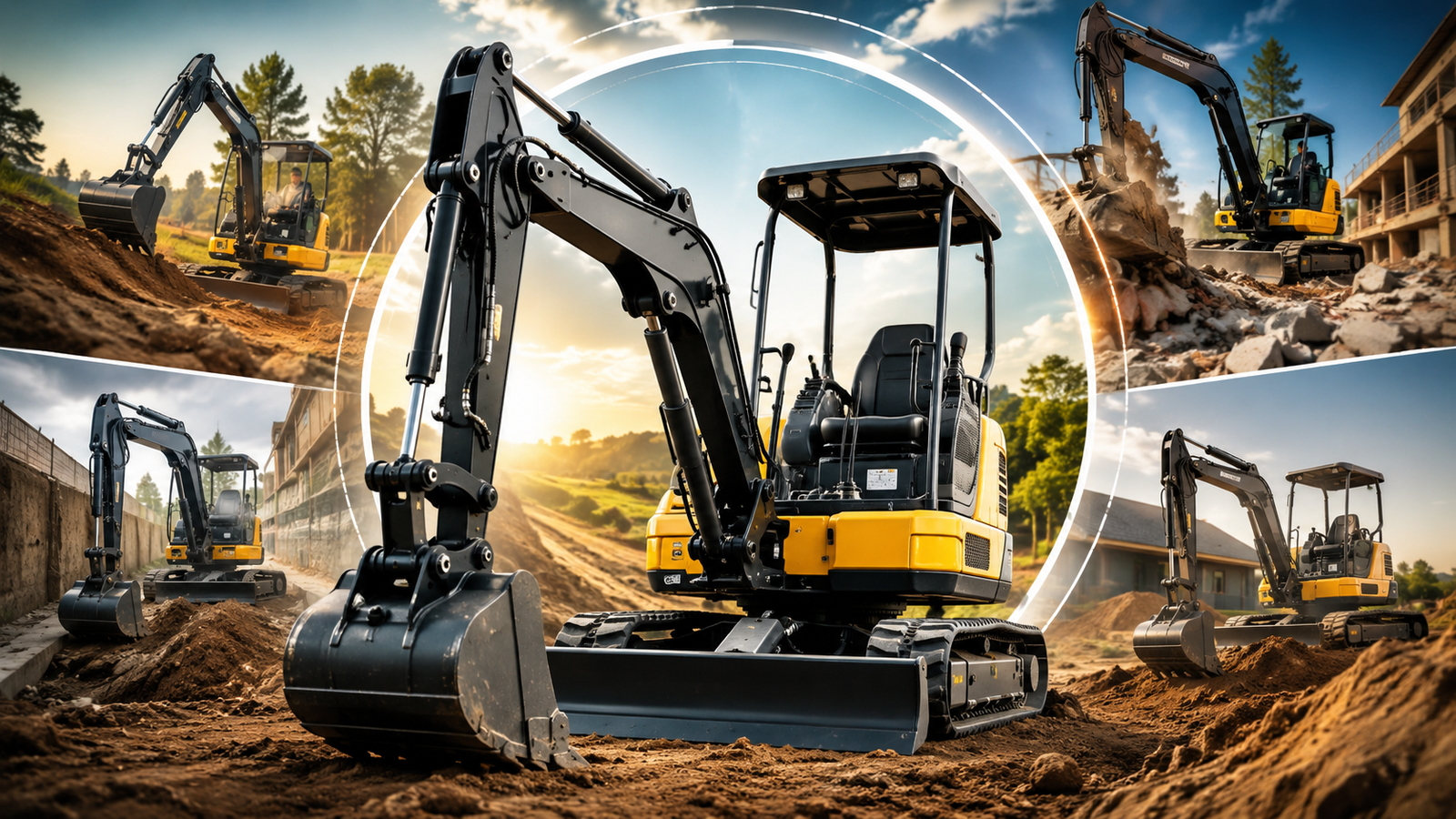
A modern machine like the TYPHON TERROR ONE STORM 1 Ton Gas Mini Excavator proves just how capable a small, spark-ignited platform can be. Built with an EPA-certified engine, this compact trench digger is tailor-made for suburban landscapers, plumbing contractors running shallow water lines, hobby farmers, and DIY builders who simply cannot justify spending massive commercial money on a heavy diesel rig. It gives you true mechanical digging power in tight backyards where full-size machines cannot squeeze past a standard wooden garden gate.
The real joy of owning a gas rig comes down to zero-stress ownership and sheer convenience. If you have ever serviced a lawn tractor, power washer, or generator, you already know your way around this engine compartment. There are no finicky glow plug timers to wait on, no diesel exhaust treatments, and no high-pressure common-rail injectors that require specialized diagnostic scan tools when something feels off.
When an unpredicted winter freeze hits, a gas unit fires right up with a turn of the key without needing a block heater or anti-gel additives in the tank. On top of that, these machines are noticeably lighter.
You can roll a 1 ton mini excavator onto an ordinary utility trailer, lash it down, and pull it behind a standard half-ton pickup or work van without worrying about overloading your axle ratings or needing commercial driving permits.
If your budget is tight and you want to buy a gas mini excavator that gets straight to work without draining your bank account, this setup makes tremendous practical sense.
- Significantly lower upfront sticker prices allow small operations and homeowners to acquire mechanical digging power without crippling debt.
- Instant, effortless cold-weather starting completely bypasses the glow plug cycles, battery strain, and fuel-gelling headaches common to diesel.
- Familiar small-engine mechanics mean you can handle your own spark plug, filter, and oil changes right in your garage using basic hand tools.
The Unmatched Muscle of Diesel TYPHON Mini Excavators
When your livelihood depends on moving yard after yard of rocky soil, tree stumps, and wet clay without losing momentum, gasoline quickly steps aside for diesel. There is a simple reason why commercial job sites across the globe run almost exclusively on heavy fuel: torque.
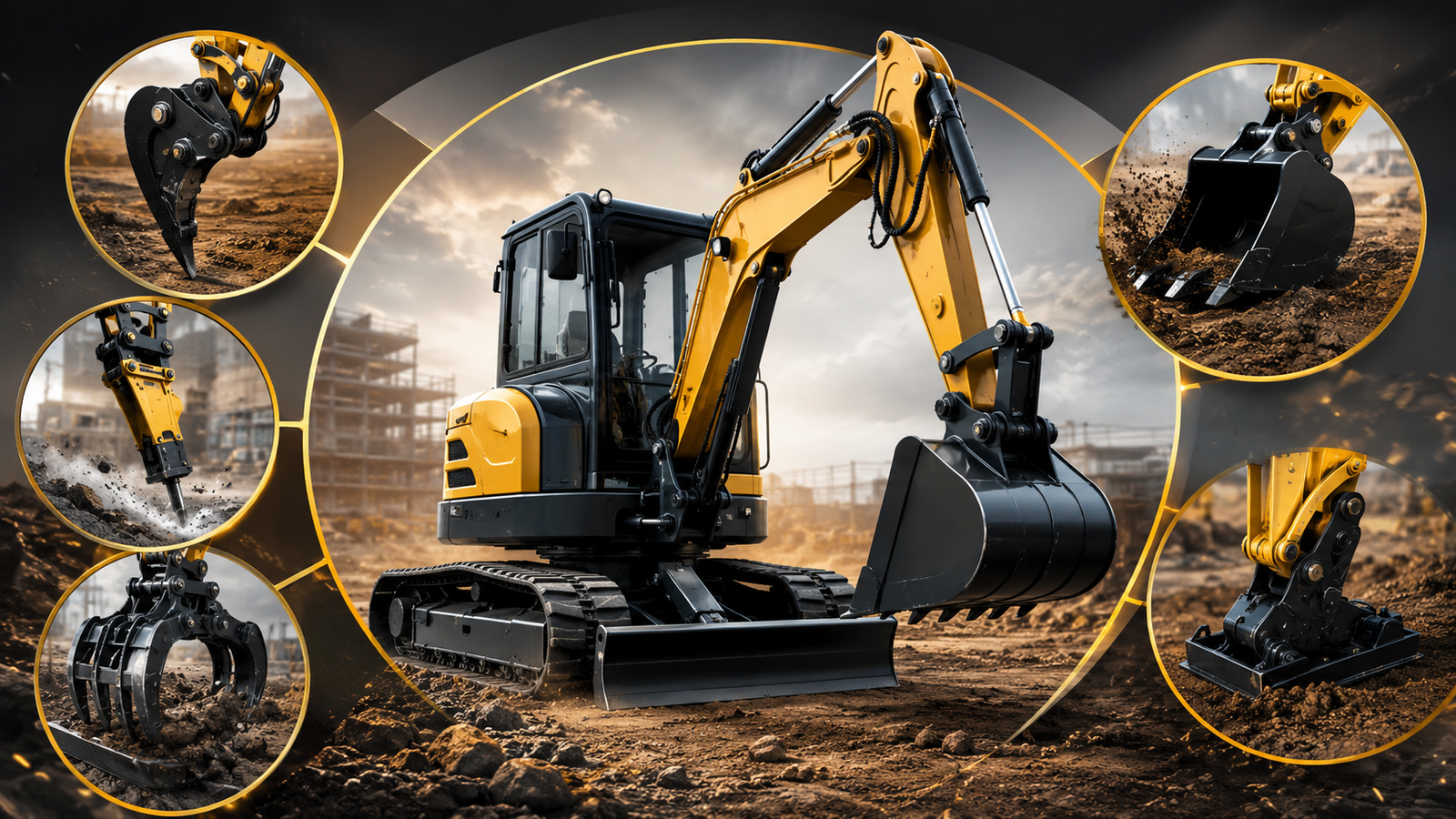
When you look at professional-grade compact excavators like the TYPHON TERROR XVIII, powered by the globally respected Kubota D722 diesel engine, you are looking at a commercial-grade tool engineered for unrelenting daily abuse. This machine does not care if the summer heat is hitting triple digits or if you have been trenching through compacted hardpan for six straight hours; it just keeps humming.
The defining characteristic of a Kubota diesel engine excavator is low-RPM grunt. While a gas engine has to scream at high revolutions to produce its peak power, a diesel engine produces massive twisting force right at the bottom of its RPM band. When your bucket teeth bite into an immovable rock shelf or an ancient oak root, a gas engine will often stutter, lose hydraulic pressure, and force you to reposition.
A diesel engine bites down, its mechanical governor feeds in fuel, and the hydraulics drive straight through the obstacle without stalling. That sustained low-end lugging ability becomes even more critical when running continuous-flow hydraulic attachments.
If you regularly hook up a heavy auger, a hydraulic thumb for grabbing logs, or a high-frequency concrete breaker, a diesel mini excavator for sale is the only configuration that reliably sustains that hydraulic pressure all shift long without overheating your fluids or cooking the motor.
- Massive, sustained low-end torque prevents engine bogging when digging through heavy clay, roots, and rocky subsoils.
- Industrial cast-iron construction and heavy-duty internal components allow diesel powerplants to easily surpass 4,000 to 5,000 hours of tough operational life.
- Superior thermal efficiency extracts maximum hydraulic performance from every gallon, making it far cheaper to run on high-hour commercial projects.
Upfront Costs vs. Total Ownership: What the Numbers Actually Say
Sorting out the true economics of Gas vs. Diesel Mini Excavators requires looking way past the showroom price tag. It is very easy to fall in love with the rock-bottom purchase price of a gas machine, just as it is easy to justify a diesel based strictly on fuel economy. But the smartest equipment buyers calculate their costs based on expected engine hours per year.
If you put 150 hours a year on a machine doing seasonal landscape touch-ups, light grading, and minor French drain installations, the lower fuel burn of a diesel will never make up for its higher initial purchase price. The gas machine preserves your cash flow upfront, leaving you money for buckets, augers, trailers, and materials.
Flip the script to an everyday utility contractor putting 700 to 1,000 hours on the meter each year, and the financial math changes rapidly. Diesel fuel packs roughly 10% to 15% more energy per gallon than gasoline, and diesel engines run at much higher thermal efficiency.
Over a couple of seasons of daily throttle time, the diesel engine saves hundreds of gallons of fuel. Then there is the big factor that many first-time buyers completely forget: depreciation. The commercial contracting world understands and trusts Kubota diesel engines.
When you go to sell or trade in a diesel-powered TYPHON after four years of hard labor, contractors will line up with cash because they know that engine is barely halfway through its operational life. Gas excavators definitely hold value in the homeowner and hobbyist circles, but they simply do not pull the same aggressive trade-in premiums on commercial lots.
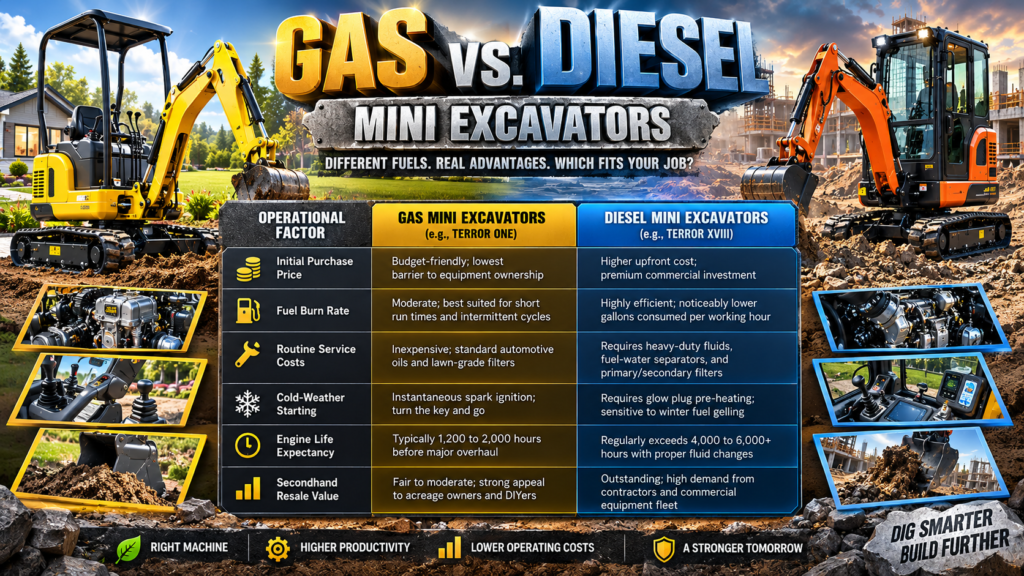
Table: Gas vs. Diesel Mini Excavators
| Operational Factor | Gas Mini Excavators (e.g., TYPHON TERROR ONE) | Diesel Mini Excavators (e.g., TYPHON TERROR XVIII) |
| Initial Purchase Price | Budget-friendly; lowest barrier to equipment ownership | Higher upfront cost; premium commercial investment |
| Fuel Burn Rate | Moderate; best suited for short run times and intermittent cycles | Highly efficient; noticeably lower gallons consumed per working hour |
| Routine Service Costs | Inexpensive; standard automotive oils and lawn-grade filters | Requires heavy-duty fluids, fuel-water separators, and primary/secondary filters |
| Cold-Weather Starting | Instantaneous spark ignition; turn the key and go | Requires glow plug pre-heating; sensitive to winter fuel gelling |
| Engine Life Expectancy | Typically 1,200 to 2,000 hours before major overhaul | Regularly exceeds 4,000 to 6,000+ hours with proper fluid changes |
| Secondhand Resale Value | Fair to moderate; strong appeal to acreage owners and DIYers | Outstanding; high demand from contractors and commercial equipment fleets |
- Gas configurations drastically reduce initial capital outlay, letting you buy attachments and hauling trailers with your leftover budget.
- High-hour operations recoup the higher purchase cost of a diesel machine through dramatic reductions in weekly fuel consumption.
- Residual trade-in value remains significantly higher on diesel units thanks to widespread commercial brand trust in industrial diesel blocks.
Real-World Job Site Performance: Torque, Breakout Force, and Daily Wear
Reading spec sheets in an air-conditioned office is one thing; feeling how a machine reacts when your bucket hits a buried boulder is another entirely. In the real world, the battle between Gas vs. Diesel Mini Excavators for sale plays out in the hydraulic pump.
Remember, your engine does not dig the hole directly—it turns a hydraulic pump that pressurizes oil to actuate the boom, arm, and bucket cylinders. The steadier your engine maintains its operating speed under load, the smoother and more predictable your controls feel.
Gas engines operate on a much narrower torque curve that sits higher up in the rev range. If you load the bucket to its absolute maximum capacity while swinging the boom and tracking forward at the same time, you may feel the engine RPM dip, which causes a brief, noticeable stutter in hydraulic response.
Diesel engines handle multi-function hydraulic demands with much more composure. Because an engine like the Kubota D722 produces its peak twisting force down low, it does not flinch when the hydraulic system demands maximum system pressure.
You can crowd the arm, curl the bucket through dense clay, and run a hydraulic thumb all at once without the engine threatening to die on you. This makes diesel the undisputed champion for technical excavation, trench box work, and deep foundation digging.
However, if your typical day involves skimming topsoil, clearing blackberry brambles, spreading crushed gravel, or digging post holes three feet deep, you will rarely push the hydraulic system to the point where that extra diesel muscle makes a practical difference. For these lighter duties, a responsive gas rig feels remarkably quick, nimble, and pleasant to run.
- Hydraulic flow remains exceptionally steady on diesel machines even when operating multiple functions under maximum digging resistance.
- Gas machines offer crisp, fast-revving throttle response that makes light grading, ditch-cleaning, and backfilling feel quick and agile.
- Running continuous, high-draw auxiliary tools like hydraulic jackhammers or rock wheels is far better matched to diesel torque profiles.
Noise, Emissions, and Confined Backyard Spaces
Modern excavating often happens just inches away from bedroom windows, property lines, and busy pedestrian paths. Because of this, noise levels and exhaust fumes have become major purchasing criteria alongside horsepower and bucket breakout force. This is another area where the contest of Gas vs. Diesel Mini Excavators yields surprising real-world differences.
Gasoline combustion is fundamentally quieter and smoother than compression-ignition diesel. A 1-ton gas excavator produces a mellow, steady hum that blends easily into standard neighborhood sounds, whereas a diesel engine produces that unmistakable, mechanical combustion clatter that echoes off suburban walls and fences.
If your business focuses on high-end residential landscaping, urban drainage repairs, courtyard restorations, or golf course maintenance, a gas machine keeps you in the good graces of homeowners and HOA boards. You can fire it up at 7:30 AM without waking the entire street.
On the flip side, diesel exhaust—even from modern, ultra-clean EPA-compliant engines—has a distinct odor that lingers longer in enclosed courtyards and deep foundation trenches. Both gas and diesel TYPHON Mini Excavators are engineered with compact frames and nimble tail-swing designs, meaning either fuel choice allows you to track through tight passages, pivot near foundations, and work along fence lines without scraping structural obstacles.
- Gas engines operate at noticeably lower sound pressure levels, making them perfect for noise-restricted neighborhoods and early-morning starts.
- Modern EPA certifications across both engine platforms ensure clean combustion and compliance with strict environmental standards.
- Compact, zero-tail and minimal-swing profiles on TYPHON frames ensure excellent maneuverability regardless of which fuel tank you fill.
Frequently Asked Questions: Gas vs. Diesel Mini Excavators
Which is better for a homeowner or hobby farmer: a gas or diesel mini excavator?
For a homeowner, hobby farmer, or weekend warrior putting fewer than 200 to 300 hours on the meter each year, a gas mini excavator is almost always the smarter buy. You save thousands of dollars upfront, the fuel does not spoil or gel during cold winter storage, and you can easily perform your own oil and filter changes without hiring an expensive field mechanic.
How much longer does a diesel mini excavator engine actually last compared to gas?
An industrial diesel engine typically lasts between 4,000 and 6,000 operating hours with regular fluid and filter changes, with many well-kept Kubota blocks going even longer before needing an overhaul. By contrast, a quality small gas engine generally lasts between 1,500 and 2,500 hours under normal working conditions before requiring significant internal rebuild work or replacement.
What are the key maintenance differences between gas and diesel compact excavators?
Gas engines require basic, affordable maintenance: fresh gasoline, standard spark plugs, an air filter, and regular automotive-grade engine oil. Diesel engines require more rigorous attention to fuel quality; you must regularly drain the fuel-water separator, replace both primary and secondary fuel filters, bleed the fuel lines if the tank ever runs dry, and use heavy-duty diesel-rated engine oils designed to suspend soot.
Do gas mini excavators struggle to start in freezing winter temperatures?
No, gas engines actually start much easier in freezing conditions than diesel engines. Because gas uses an electric spark to ignite a highly volatile fuel-air mixture, it will generally fire up instantly in sub-zero weather. Diesels rely on high compression heat to combust fuel; in freezing weather, they require functioning glow plugs, strong battery cranking power, and anti-gel fuel conditioners to prevent fuel wax from clogging filters.
Why do contractors almost always choose diesel mini excavators over gas?
Commercial contractors prioritize uptime, fuel efficiency on 8-hour shifts, and raw digging torque. A diesel engine maintains hydraulic pressure through heavy clay and rock without bogging down, burns less fuel under continuous daily loads, and retains a much higher resale value when traded into commercial equipment dealerships after years of service.
Can a 1-ton gas mini excavator operate a hydraulic auger or breaker effectively?
Yes, a 1-ton gas excavator can run standard attachments like post hole augers, hydraulic thumbs, and light grading buckets quite well. However, if you plan to run continuous-duty, high-impact attachments like heavy hydraulic concrete breakers or continuous trenchers for hours at a time, a diesel machine is better suited to handle that constant, heavy hydraulic heat and load without straining the engine.
Does diesel fuel go bad as quickly as gasoline when sitting in the tank?
Untreated gasoline containing ethanol can begin to degrade and attract water in as little as 30 to 60 days, gumming up carburetors and fuel needles during extended seasonal storage. Clean diesel fuel generally stays stable for six to twelve months in a clean tank, though it is vulnerable to algae or microbial growth if moisture collects at the bottom of the fuel reservoir over long periods.
Final Verdict: Which Machine Belongs on Your Trailer?
At the end of the day, picking the winner in the Gas vs. Diesel Mini Excavators matchup comes down to matching your machine to your real-world workload. If your business model involves tackling residential backyards, setting fence posts, handling minor drainage tasks, or managing acreage on weekends, a gas-powered rig like the TYPHON TERROR ONE STORM gives you incredible versatility, zero cold-start headaches, and low upfront costs that keep your cash reserves intact.
If you are a full-time contractor, utility installer, or rental operator whose machines run hard all day through punishing ground conditions, stepping up to a Kubota-powered diesel workhorse like the TYPHON TERROR XVIII is the only move that makes long-term business sense. The raw torque, heavy hydraulic flow, extended engine life, and rock-solid trade-in value will pay you back tenfold over the life of your machine. Explore the full lineup at MachineryAsia, assess your job site needs honestly, and invest in the power that will drive your business forward.