Top 5 Benefits of Using Mini Excavators in Tight Construction Spaces
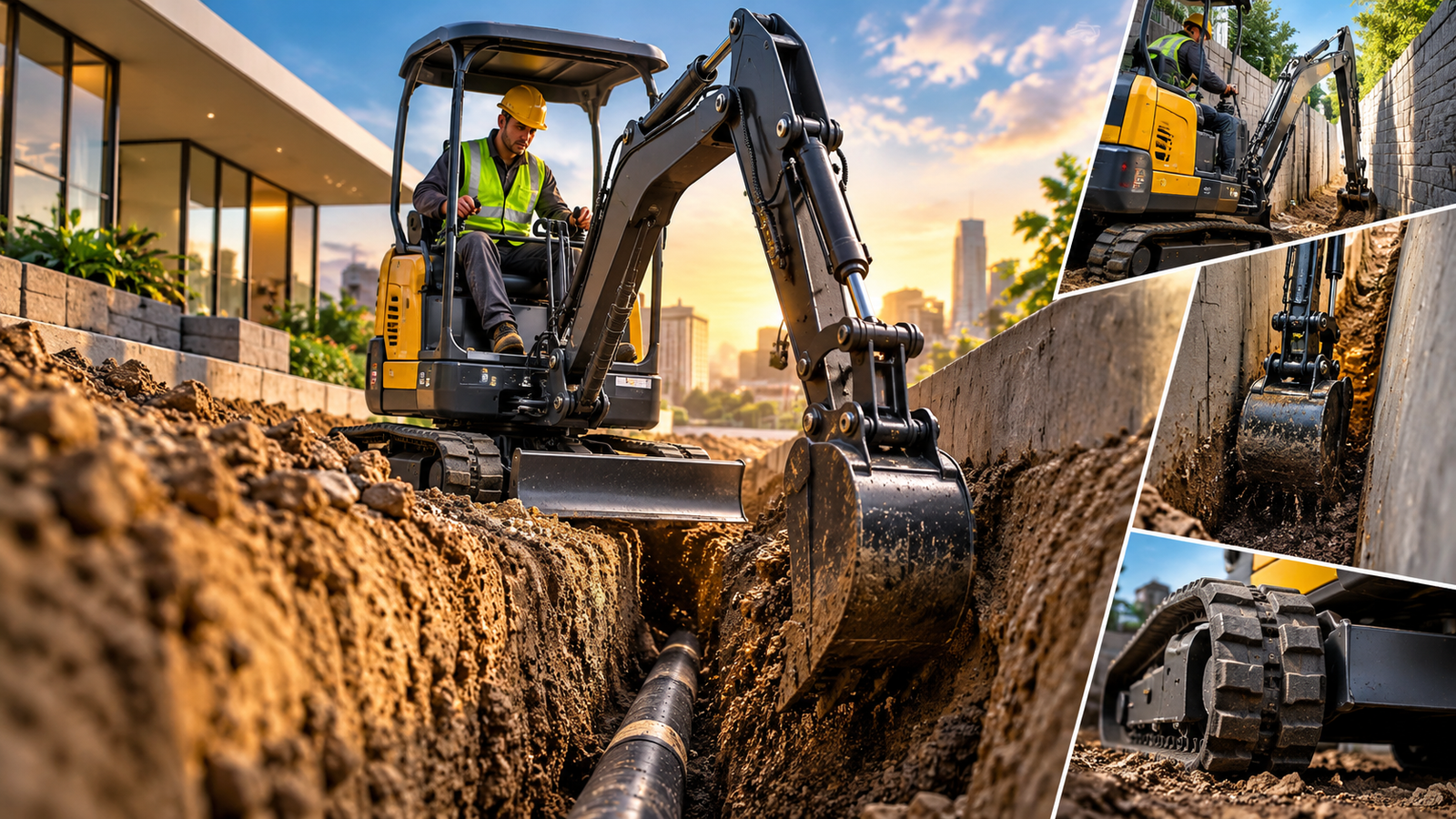
Urban development is moving at such a high pace that construction has to be carried out in densely packed areas; For example, backyard renovation work in residential neighborhoods can be considered as one extreme by understanding the benefits of using mini excavators; while, in the other extreme, there are utility repair works which are so tightly enclosed that they are between the tunnels of the skyscrapers in the downtown areas.
The tiny operating environment is one of the main reasons why heavy-duty excavators quickly turn into liabilities rather than assets. Case in point, they often are subjected to operational lock out due to limited swing clearance or their excessive physical bulk.
Benefits of Using Mini Excavators
Knowing the key benefits of using mini excavators in these environments is actually the main thing that will help you consistently have successful projects.
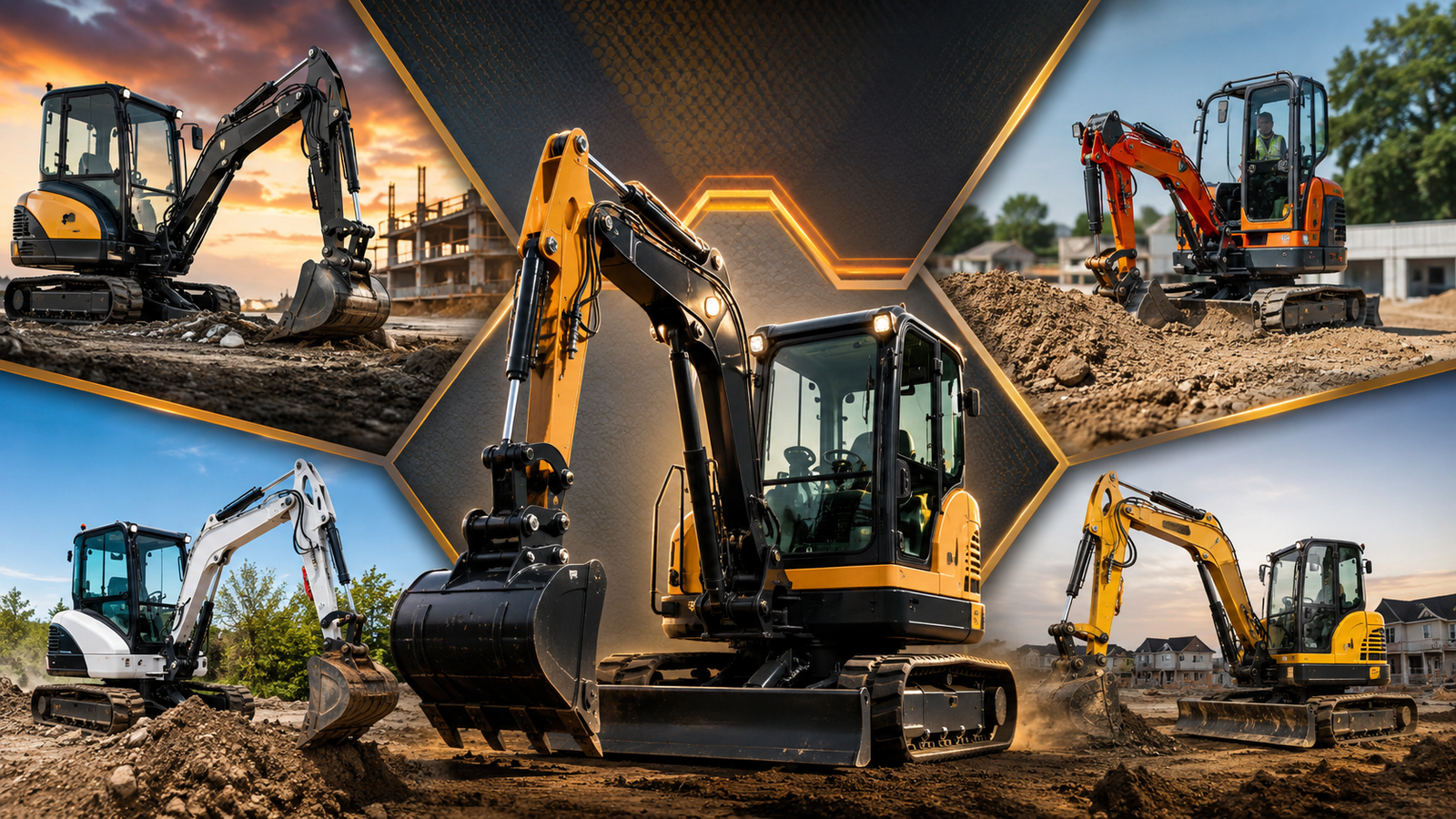
Having a huge hydraulic power is the aim of these mini excavators that draws a smaller scaled human footprint; to be honest, they were able to change the entire procedure of modern earthmover ground works on tight jobsites.
Our advanced heavy equipment at Machinery Asia has helped a large number of companies to fully realize the commercial benefits of using mini excavators so that operators can comfortably navigate tight spots without sacrificing the rugged hydraulic breakout force required for demanding tasks.
Our premium lineup has been able to crack the problem of high-risk, tight space bottlenecks and turn them into highly profitable, seamless operations by marrying top-notch engineering and user centric design layouts, operating compact diggers.
If you have to trench next to a historic brick foundation, or get a landscape overhaul by accessing through narrow garden gates, or have to dig for a new basement under a commercial facility that is still in operation, then the machinery you will choose at the end of the day will be the one that dictates your project’s financials.
Anyway, in the piece below, we provide a comprehensive, through-the-lens perspective of the structural and financial benefits of using mini excavators
inside tightly constrained construction areas, showing how these multifunctional workhorses can help maintain safety, reduce operating costs, and increase production metrics.
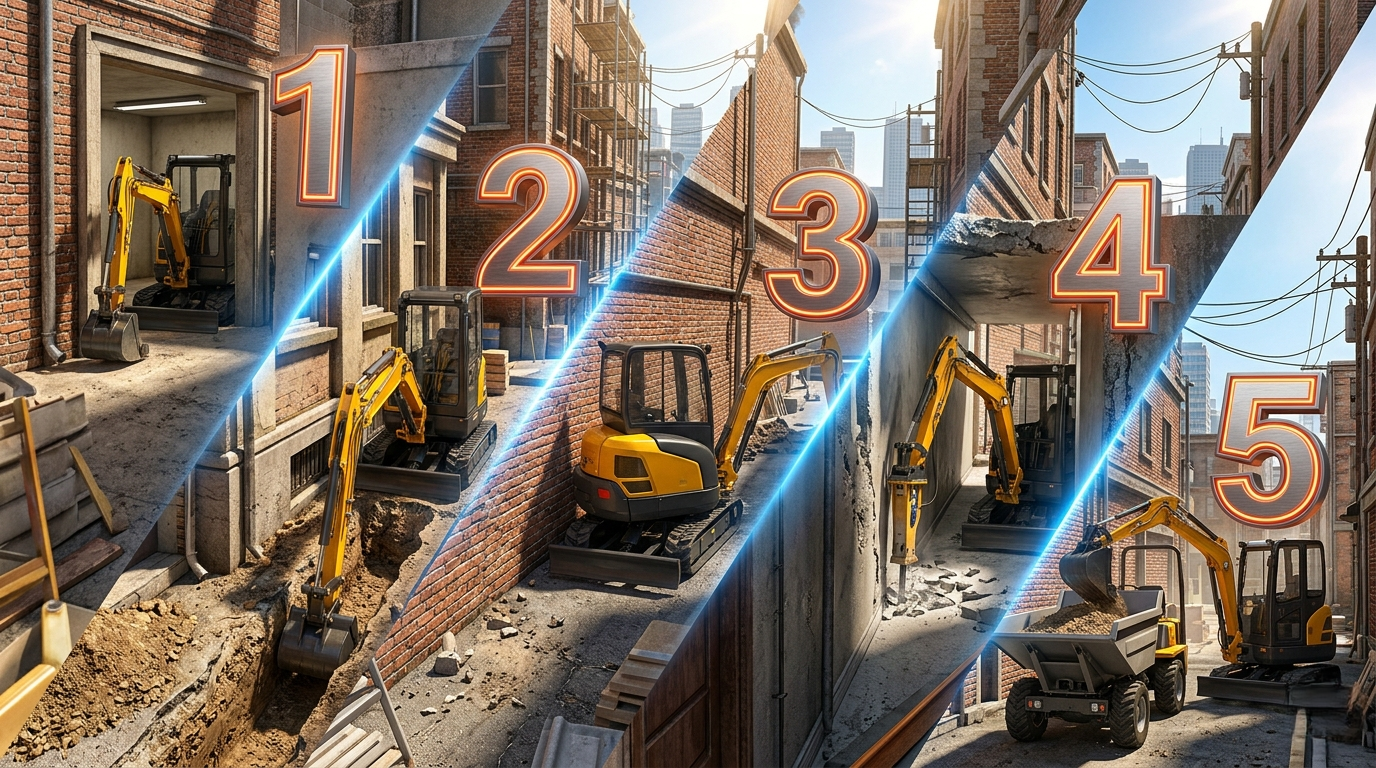
Top 5 Benefits of Using Mini Excavators
1. Exceptional Maneuverability and Compact Footprints
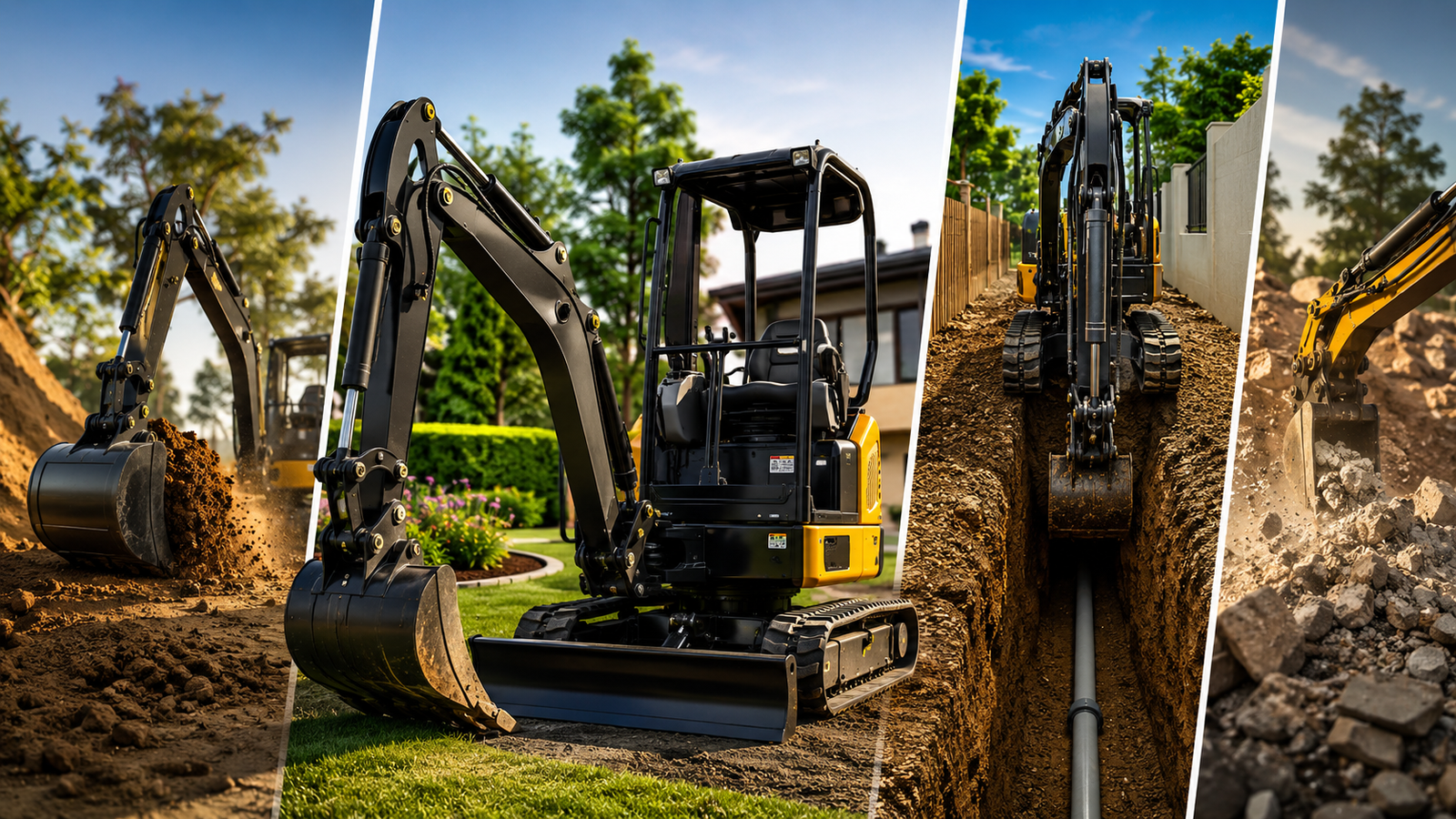
The most remarkable aspect engineering-wise of the mini excavator is its highly localized, space-saving architecture. Full-sized excavators require a lot of space for structural clearances to turn their upper cabs and counterweights safely, making them impossible to operate close to existing walls, public walkways, or delicate landscaping assets.
One of the leading spatial benefits of using mini excavators (especially ones created with zero or ultra-short tail swing layouts) is that they can rotate their machine’s house fully within the width of their own undercarriage tracks without having to worry about rear-end structural collisions.
On top of that, they have quite narrow profiles which allow them to get through standard gate openings, tight alleys, and interior doorways, which is something that will instantly block bigger equipment lines.
We, at Machinery Asia, have our machines made specifically towards helping the users to get these space advantages, in other words, maximizing the practical benefits of using mini excavators by decreasing the need for manual, exhausting hand-shoveling labor.
By bringing together a of small chassis width with the highly accurate and independent boom swing mechanics, these machines are capable of conducting a complex digging operation around existing infrastructure perfectly.
- Zero Tail Swing Engineering: Cutting the counterweight overhang past the tracks to a minimum, the excavator cab is able to rotate a full 360 degrees without striking adjacent structures.
- Retractable Undercarriage Tracks: In order to pass through narrow gates and doorways, operators are given the ability to hydraulically narrow the track width. Once inside, they can expand them for optimized digging stability.
- Independent Boom Swing Control: The digging arm can be offset left or right independently of the cab rotation, allowing for trenching parallel to structural foundations with great precision.
2. High Versatility Through Multi-Functional Attachments
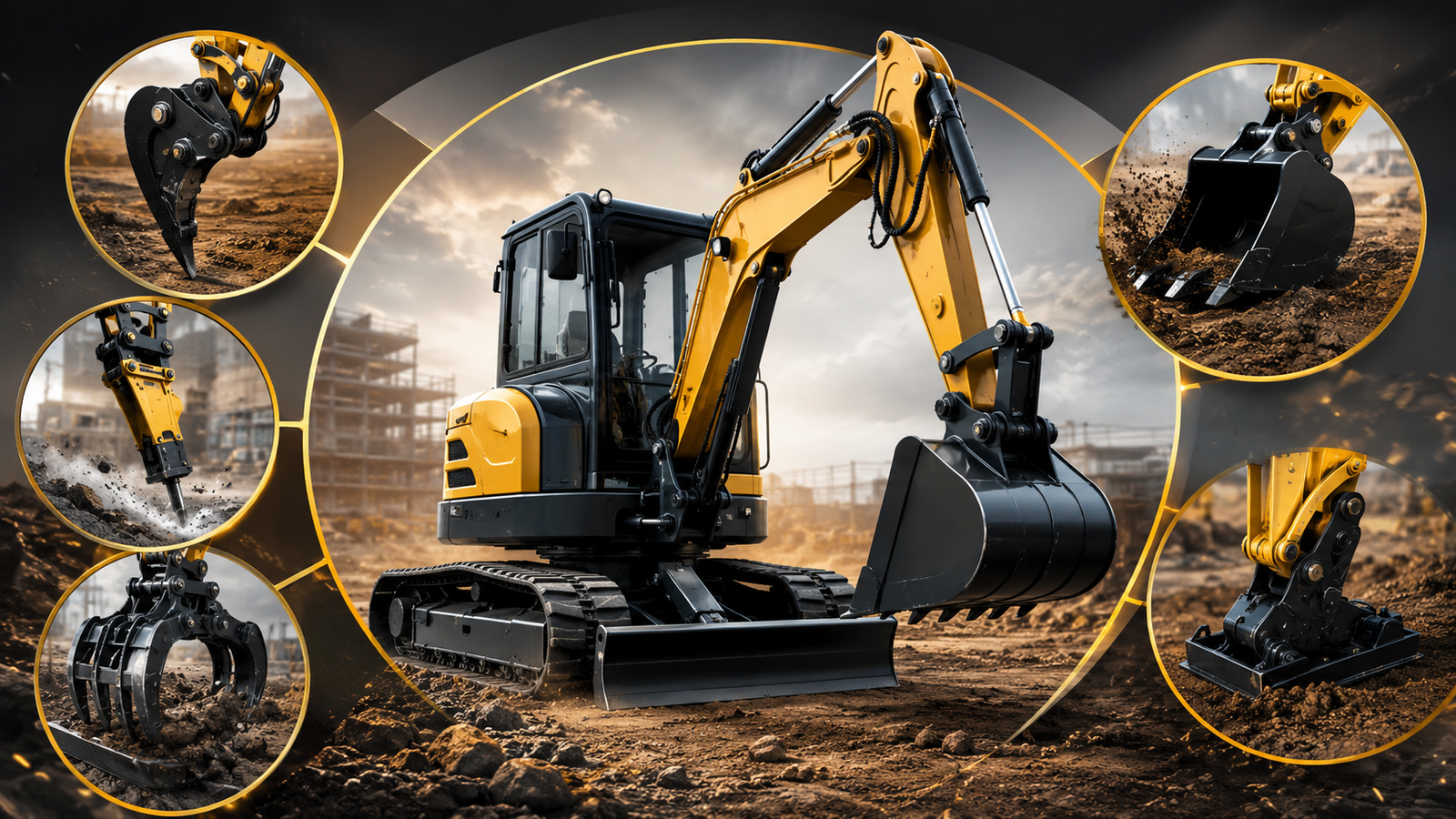
One common misinterpretation about mini-sized construction equipment is that a lack in size will mean that the projects utility will also be lower or the functional capabilities reduced. Quite the opposite, in fact, the operational benefits of using mini excavators come from the fact that they are extremely versatile tool carriers that can perform a whole range of specialized tasks given the right kind of attachments changes.
Our range and quality of equipment accessories at Machinery Asia are here not only to maximize the economic benefits of using mini excavators for you but also to be the ones that help you in transitioning between their different working modes easily. In other words, you can use one machine for all your soil moving, concrete breaking and post-setting tasks.
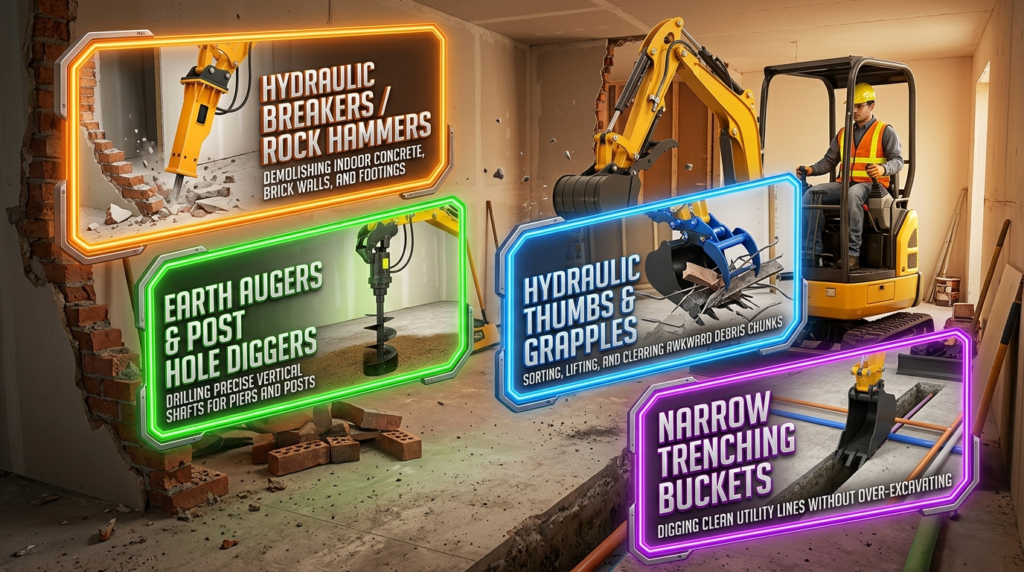
Table: Benefits of Using Mini Excavators Attachment Types
| ATTACHMENT TYPE | PRIMARY OPERATIONAL APPLICATION IN TIGHT SPACES |
| Hydraulic Breakers / Rock Hammers | Demolishing indoor concrete, brick walls, and footings |
| Earth Augers & Post Hole Diggers | Drilling precise vertical shafts for piers and posts |
| Hydraulic Thumbs & Grapples | Sorting, lifting, and clearing awkward debris chunks |
| Narrow Trenching Buckets | Digging clean utility lines without over-excavating |
- Auxiliary Hydraulic Integration: Equipped with high-flow auxiliary lines mounted on the arm to power demanding tools such as continuous-rotation augers and high-impact breakers.
- Quick-Coupler Attachment Systems: A single field operator is able to perform a swap of heavy mechanical attachments on the jobsite without needing to call in assistance. This is very time-saving as it maximizes the amount of time spent on working.
- Multi-Task Worksite Consolidation: All tasks can be done using one small platform (units like skid steers, jackhammers, and manual post-hole diggers are therefore replaced).
3. Reduced Environmental Impact and Surface Damage
Bringing huge heavy-duty machines on residential lawns, historical preservation zones, or paved urban walkways often leads to damaging surface areas which can be very expensive to repair afterwards.
Because they exert great amounts of pressure on the ground, big steel-tracked excavators are not only the possible cause behind the breaking of drainage pipes hidden below surface but they can cause paved surfaces to crack and completely destroy manicured turf and landscaping root systems.
Taking into account that there would be post-project remediation costs occurring, then the potential profit margins would very quickly be eaten up. These are exactly the reasons why the benefits of using mini excavators to preserve existing structure have been highlighted.
Mini excavators completely remove this risk by spreading their lighter working weights over the rubber tracks that have been widened and specialized. Because of minimal ground pressure, even delicate surfaces remain absolutely unmarked while the rubber tracks provide good grip on slick surfaces.
At the same time being environmentally conscious extends to having engines that produce very low emissions so that they are EPA-compliant like the Kubota diesel engine series which have been highly regarded around the globe and are found in Machinery Asia’s premium product line. This enhances the environmental benefits of using mini excavators as the emissions from the exhaust and the noise pollution that is localized are kept to a minimum inside indoor or urban environments.
- Low Ground Pressure Metrics: Weight distribution is optimized and use of rubber tracks is made to prevent gouging, asphalt cracking, and deep soil compaction.
- EPA-Compliant Powertrains: Exhaust emissions are far less toxic because they are generated by internal combustion systems which have been highly refined. This means that such environments as semi-enclosed ones are safe for operators.
- Whisper-Quiet Acoustic Footprints: Project sites that have to comply with strict municipal noise ordinances will find it easier when these machines are used as they operate at significantly lower decibel levels than traditional full-sized machinery.
4. Simplified Transport Logistics and Cost-Efficiency
For project managers, transferring massive construction assets from one urban location to another is more than a logistical and financial nightmare.
It is not an exaggeration to say that moving a 20-ton excavator alone would require a huge haul offer permit, vehicle escort of wide loads, license of commercial driver’s (CDL), and multi-axle trucks for the flatbed. These logistical complications multiply mobilization costs dramatically and introduce severe scheduling bottlenecks when navigating restrictive metropolitan transit corridors.
| Cost Metric | Mini Excavator Logistical Advantage |
| Transport Vehicle Requirements | Standard pickup trucks and light utility trailers |
| Regulatory Transport Permits | Zero wide-load permits or specialized CDL certifications |
| Daily Fuel Consumption | Highly optimized, low-displacement fuel burn rates |
| Ongoing Component Maintenance | Accessible service panels and affordable replacement parts |
You can also say that the benefits of using mini excavators and their reduced weights and highly efficient sizes also help in rewriting the transport logistics game completely in the operations by bringing in cost-efficiency, long before the arrival of the equipment on the jobsite.
Because these machines have highly compact operational weights, they are taxiable on standard utility trailers and towed behind conventional heavy-duty pickup transport trucks or standard commercial work vans.
Of course, this kind of mundane transport mode hugely cuts down on both fuel consumption and permits, which require regulatory approvals for the complexity of the process. Also, small-scale contractors are able to move their assets quickly between multiple work locations that are scattered without the problem of waiting for transport schedules.
- Streamlined Towing Operations: Easy fitting on conventional towing setups eliminates the need for expensive third-party heavy-haul transport services.
- Reduced Overhead Fleet Costs: Along with lower initial acquisition costs, the cost of replacement parts is considerably less as compared to larger, structurally complex earthmovers.
- Fast Site-to-Site Mobilization: Mere existence of the transport facility allows quick work deployment without any waiting for specialized transport schedules.
5. Intuitive Controls and Superior Operator Safety
At any rate, operating heavy construction machinery inside confined, highly risky spatial environments will require minrs you to keep your concentration level very high, work accurately, and be aware of your surroundings at all times.
Operators of traditional mechanical lever systems are known to get fatigued and tired, or even not able to get enough rest and as a result, accidental control inputs increase and this would not only jeopardize site structures but also worker safety.
In order to help resolve this problem, the safety oriented benefits of using mini excavators are focused a lot on ergonomic and advanced pilot control joysticks that offer smooth, highly responsive hydraulic feedback.
We at Machinery Asia do not consider safety and comfort of the operator as the secondary objectives of design, let alone throw them out altogether.
Our compact excavators are built with operator ergonomics in mind and come with features like hydraulic joysticks, ergonomically optimized cabins, and independent boom swings, let you take full advantage of these safety benefits of using mini excavators as you carry out small-scale micro-adjustments seamlessly.
The combination of a compact, reinforced canopy frame, ROPS/FOPS certification as well as the 360-degree glass wide view layout will give operator the unobstructed and excellent visual of environment which leads to minimization of blind spots and maximization of safety for all the personnel on the ground.
- Ergonomic Hydraulic Joysticks: Operators may now control bucket and arm movements effortlessly and accurately with a pressure-proportional, hydraulic joystick.
- Certified Protective Enclosures: ROPS and FOPS structures mitigate the risks from roll-overs and falling objects.
- Panoramic Structural Visibility: Operators enjoy a wide-angle view of their worksite due to minimal pillar blockages, maximizing safety.
FAQs – Benefits of Using Mini Excavators
What are the main reasons to use mini excavators rather than large ones?
The main advantages of mini excavators are much better access in small spaces, cheaper and easier transport logistics, a much lower possibility of surface damage because of their low ground pressure, and versatility through multi-functional attachments which allow the machines to be used for a variety of tasks on a single worksite without the need for multiple specialized pieces of equipment.
Can a mini excavator break up hard soil and rocks?
Mini excavators can literally break down even very hard soil like clay which is tightly compacted, gravel, and moderately rocky soil. They also offer competitive breakout force to that of their working size. This gives the machine the power to work without requiring help wherever it is capable of doing so. However, for these very dense and solid rock layers, special rock breakers are used to enhance digging efficiency greatly.
Which one is better for compact excavators – rubber or steel tracks?
For use in cities, residential areas, or even indoors, rubber tracks are what most would consider to be the best option for compact excavators. Apart from excellent traction on asphalt, concrete, and grass surfaces, the biggest advantage is that rubber tracks will not damage those surfaces in the least. On the other hand, steel tracks are typically used for demolition debris piles or heavy mud slopes that cause a lot of track tearing. The downside however, is that they will completely scratch and even fracture finished pavements.
How deep can the typical 2-ton mini excavator go?
Depending on the configuration of the boom and arm, a high-performance 2-ton-class mini excavator can reach a maximum digging depth of approximately 7 to 8.5 feet (2.1 to 2.6 meters). This capacity makes it an ideal equipment for standard residential utility connections, sewer installations, footing excavations as well as swimming pool installations, all with a remarkably compact operating footprint.
Do mini excavators pose a risk in indoor operation?
Mini excavators can be operated indoors safely provided strict environment safety measures are followed such as proper ventilation or exhaust systems to avoid excessive carbon monoxide build-up. Rubber tracks also help prevent damage to structural floors, but operators still need to be mindful of low ceiling height and structural column clearances.
What does zero tail swing mean and why is it important in tight construction spaces?
Zero tail swing refers to a design feature of an excavator where the upper structure of the excavator can rotate 360 degrees without any part of the superstructure extending beyond the width of the undercarriage. This is important in tight construction spaces because it eliminates the risk of the machine’s counterweight contacting walls, utility poles, trees, or workers, thereby enabling safe and efficient operation right up to the barrier.
How often do compact mini excavators require routine maintenance?
The routine maintenance of a compact mini excavator is typically limited to a brief daily check at the start of the operating shift which primarily involves engine oil checks, inspection of hydraulic lines for leaks and greasing of the high-friction pivot points. More extensive maintenance activities such as oil changes, fuel filter replacements and hydraulic fluid renewals are usually scheduled every 250 to 500 operating hours and adhere to the manufacturer’s product service manual.