Tracked vs. Wheeled Skid Steer Loaders: Which One Is Best for Your Terrain?
Choosing the right equipment for heavy-duty earthmoving and site preparation can make the difference between a project that goes smoothly and one that sinks—literally. We at Machinery Asia know that both professional contractors and DIY land managers are at a very important point in their lives: they have to choose between a tracked skid steer and a wheeled skid steer.
Both machines are very versatile and can do a lot of different things, like grading, digging, moving snow, and moving materials. The term “skid steer,” on the other hand, refers to two very different undercarriage systems that react differently to the ground below them.
This guide goes into great detail about the tracked vs. wheeled skid steer debate to help you figure out which setup will give you the best return on investment and operational efficiency for your specific terrain.
Difference between Tracked Skid Steer vs. Wheeled Skid Steer
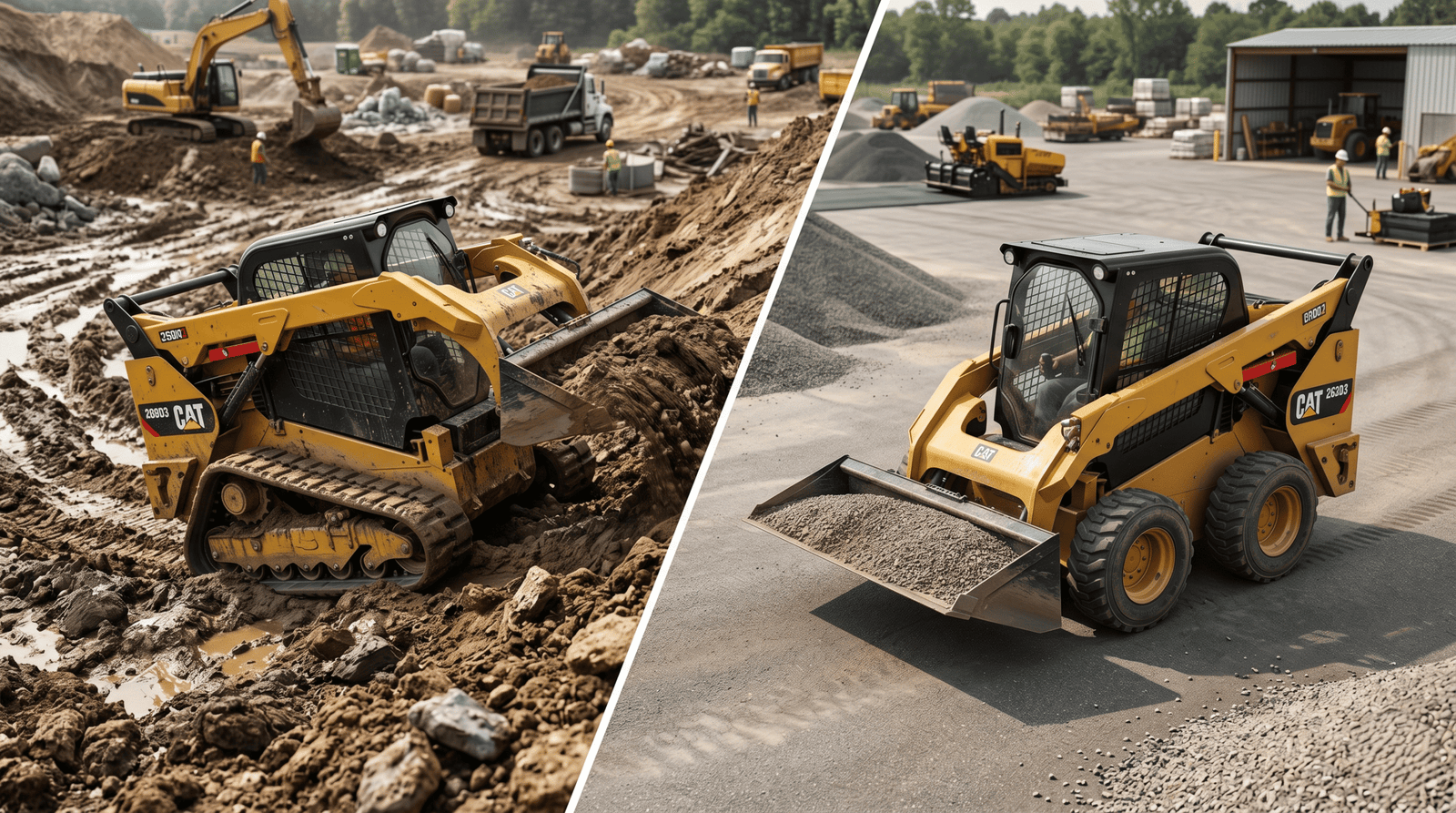
The main difference between these two is how they interact with the ground. A wheeled skid steer has four separate tires that hold the weight of the machine on four small contact points. This makes the ground pressure very high.
On the other hand, a tracked skid steer (also called a Compact Track Loader or CTL) spreads that same weight over two wide, continuous tracks, which lowers the pounds per square inch (PSI) by a lot. Because of this basic difference in engineering, each machine has its strengths and weaknesses.
If you want to get the most out of your fleet, the first thing you need to do is learn how these mechanics work. This is true whether you’re driving through Singapore’s muddy construction sites or the paved logistics hubs of a big city warehouse.
Getting to Know the Mechanics: How tracked and wheeled skid steer systems are different
The main difference between tracked and wheeled skid steers is how well they grip the ground and how they distribute weight. Wheeled loaders are made to be fast and agile on hard surfaces.
The tires can turn and “skid” with very little friction on concrete or asphalt because they have a smaller footprint. This is why they are the best choice for building cities, fixing roads, and using warehouses. But the same high ground pressure that lets you go fast on hard ground can be a problem on soft, wet, or sandy ground, where the wheels tend to dig in and get stuck.
However, tracked skid steer loaders are the best at floating. They can “float” over mud, sand, and delicate turf without leaving deep ruts because they spread the machine’s weight over a larger area. This is especially helpful for landscaping or farming work where you don’t want the soil to get too hard.
The tracked version is a great partner for heavy-duty land clearing and forestry because it has more surface contact, which gives it more pushing power and stability on slopes.
- Ground Pressure: Tracked models usually only put 3 to 5 PSI on the ground, while wheeled models can put 30 to 50 PSI on the ground.
- Traction: Tracks give you a steady grip, which is important for working in the rain or on slippery slopes.
- Maneuverability: Wheeled machines can move more quickly on dry, solid ground, which means they can cycle through tight spaces faster.
How well each machine works on different types of terrain
To pick the best machine, you need to think “terrain-first.” If you work on a paved yard or a highway project every day, the choice between tracked and wheeled skid steers heavily favors wheels.
Tires are made to handle the heat and friction of asphalt, and they let you go much faster—sometimes up to 12 mph or more. This speed is very important when you need to move things quickly across a large, stable site.
But if your land is uneven, unpredictable, or likely to turn into a “mud bath” after a storm, the tracked skid steer is the clear winner. The tracks keep the machine from sinking by acting like a bridge over soft spots. In Southeast Asia, where tropical rains can quickly turn a site into a swamp, the ability to keep working while wheeled machines are down is a huge advantage over other companies.
Tracked units are also great for “fine grading” because their long footprint keeps them stable, which stops the “hobby-horsing” effect that happens with wheeled units on bumpy ground.
- For hard surfaces like concrete and asphalt, use wheeled skid steers to keep the tracks from wearing out too quickly and leaving ugly rubber marks.
- Soft or wet ground (mud or sand): Use tracked skid steers to keep the machine floating and stop it from getting stuck.
- Slopes and Hills: Tracked models have a lower center of gravity and more “bite,” which makes them safer to use on steep slopes.
Cost of ownership (TCO) and maintenance
It is impossible to talk about the comparison between tracked and wheeled skid steers without also talking about money. In general, wheeled skid steers cost less to buy at first and cost less to keep up over time.
Replacing tires is not too expensive, and the mechanical drive system for wheels is simpler and has fewer moving parts. This makes the wheeled loader a very cost-effective choice for businesses that mostly work on “forgiving” surfaces like gravel or dry dirt.
Tracked loaders are more expensive, but they work better in tough conditions. There are rollers, idlers, and sprockets on the undercarriage of a tracked machine that need to be cleaned and checked on a regular basis.
It costs a lot more to replace a set of tracks than it does to replace four tires. But many owners say that the higher maintenance costs are worth it because they can work more days a year in any weather.
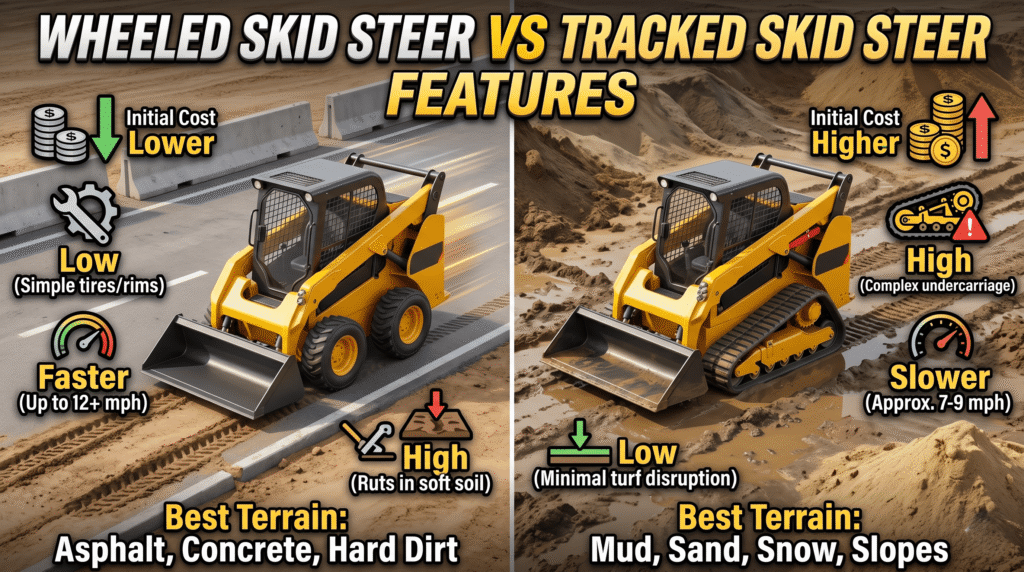
Table: Wheeled Skid Steer Vs Tracked Skid Steer Features
| Feature | Wheeled Skid Steer | Tracked Skid Steer (CTL) |
| Initial Cost | Lower | Higher |
| Maintenance | Low (Simple tires/rims) | High (Complex undercarriage) |
| Travel Speed | Faster (Up to 12+ mph) | Slower (Approx. 7-9 mph) |
| Ground Damage | High (Ruts in soft soil) | Low (Minimal turf disruption) |
| Best Terrain | Asphalt, Concrete, Hard Dirt | Mud, Sand, Snow, Slopes |
- Taking care of the undercarriage: Tracked machines need to be cleaned every day to keep dirt from hardening and hurting the parts inside.
- Tire Longevity: Cheaper tires can be punctured by sharp objects, so think about using solid or foam-filled tires on demolition sites.
- Operating Hours: Tracks can last between 1,200 and 1,600 hours, but tires may need to be replaced more often depending on how rough the surface is.
How to Pick the Best Attachments for Your Loader
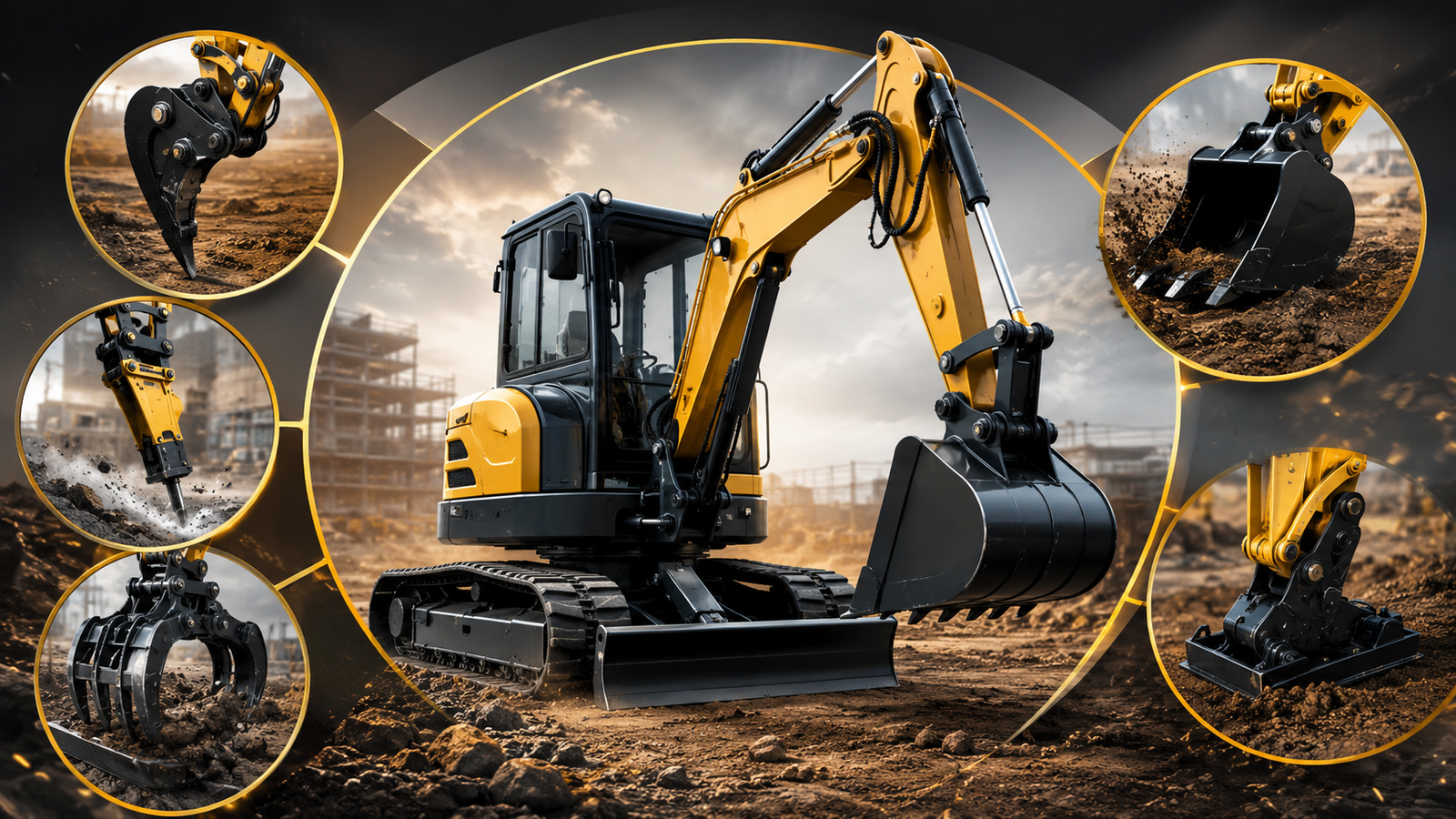
No matter if you get a tracked or wheeled skid steer, the real power of these machines is in their attachments. Both setups usually have a universal quick-attach system, which lets you switch between buckets, pallet forks, augers, and hydraulic hammers in just a few minutes.
But the base of the machine can change how well an attachment works. For instance, a tracked machine is often better for a heavy brush cutter or forestry mulcher because the tracks give the machine the stability it needs to handle the attachment’s weight and the rough ground of a clearing site.
A wheeled skid steer with pallet forks is very good at moving things around on a flat warehouse floor because it is fast and agile. We have a lot of attachments that work with both our tracked and wheeled Honda-powered mini skid steers at Machinery Asia.
If you’re digging post holes or moving heavy pallets, make sure the attachment fits the right undercarriage so you don’t put too much strain on the engine or put safety at risk.
- Lifting and Loading: Tracked loaders can usually carry heavier loads at full reach without tipping over, and they are more stable when doing so.
- Precision Work: People often choose wheeled loaders for “spot” jobs in tight urban corners where they need to turn quickly.
- Flexibility: If you sometimes need tracked performance, think about using “Over-the-Tire” (OTT) tracks for wheeled units as a hybrid solution.
FAQs – Tracked vs. Wheeled Skid Steer Loaders
Is a tracked skid steer better than a wheeled one for clearing snow?
Wheeled skid steers are better for clearing snow off of paved surfaces because they put more pressure on the ground to “bite” through the snow to the pavement. But a tracked loader won’t get stuck on deep, unplowed, or soft ground because its flotation keeps it from doing so.
Which machine is worth more when you sell it?
Because they are in high demand in the landscaping and construction industries, tracked skid steers (CTLs) have a very high resale value right now. The condition of the tracks, on the other hand, has a big effect on the final price because the undercarriage is so expensive to fix.
Is it okay to use a tracked skid steer on concrete?
Yes, but you shouldn’t do it for long periods of time. Concrete and asphalt are rough surfaces that “scrub” rubber tracks, which wears them down much faster than soil. It can also leave black marks on surfaces that are already finished.
How much more does it cost to keep a tracked loader in good shape?
The cost of running a tracked machine can be 30% to 50% higher per hour than that of a wheeled machine. This is mostly because of the cost of replacing the undercarriage parts and tracks.
Which one is easier to move from one job site to another?
Wheeled skid steers are usually lighter and narrower, which makes them easier to fit on regular trailers. Tracked models are heavier and may need a trailer that can hold more weight and a stronger vehicle to tow them.
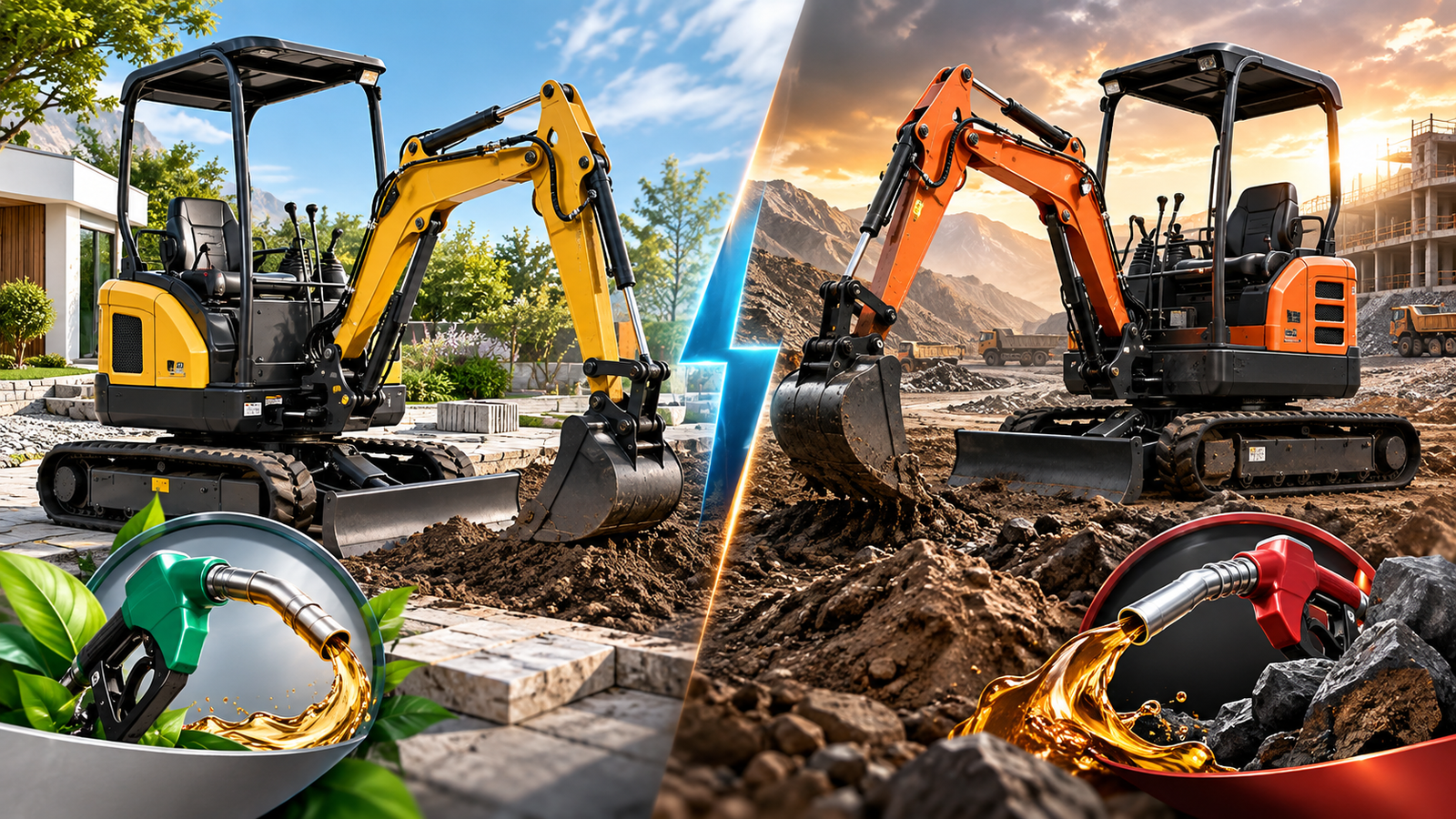
Do tracked skid steers use more gas?
In general, yes. There is more rolling resistance because tracks have more surface area that touches the ground. This means that the engine has to work harder to move the machine, which uses a little more fuel than wheels.
Is it possible to put tracks on a wheeled skid steer?
Yes, you can use tracks that go over the tires. These tracks are made of steel or rubber and fit over tires that are already there. They are a “middle ground” solution that gives you extra traction when you need it without the full cost of a tracked machine.
Final Decision: Choosing the Best Option for Your Business
The choice between tracked and wheeled skid steers ultimately depends on where you work most of the time. The wheeled skid steer is the best choice for contractors who work on developed sites, roads, or hard-packed gravel 90% of the time. It has the speed and low maintenance you need to keep your costs down.
But if your business needs to be able to work in any weather—like landscaping, forest work, or building new sites where the ground hasn’t been compacted yet—the tracked skid steer is a must-have. We have both wheeled and tracked mini skid steers at Machinery Asia.
They all come with reliable engines, so you can be sure that you have the power and dependability to get the job done no matter what kind of terrain you have to work on. Check out our product gallery at machineryasia.com.sg to see all of our newest models and choose the best one for your next project.