Table of Contents
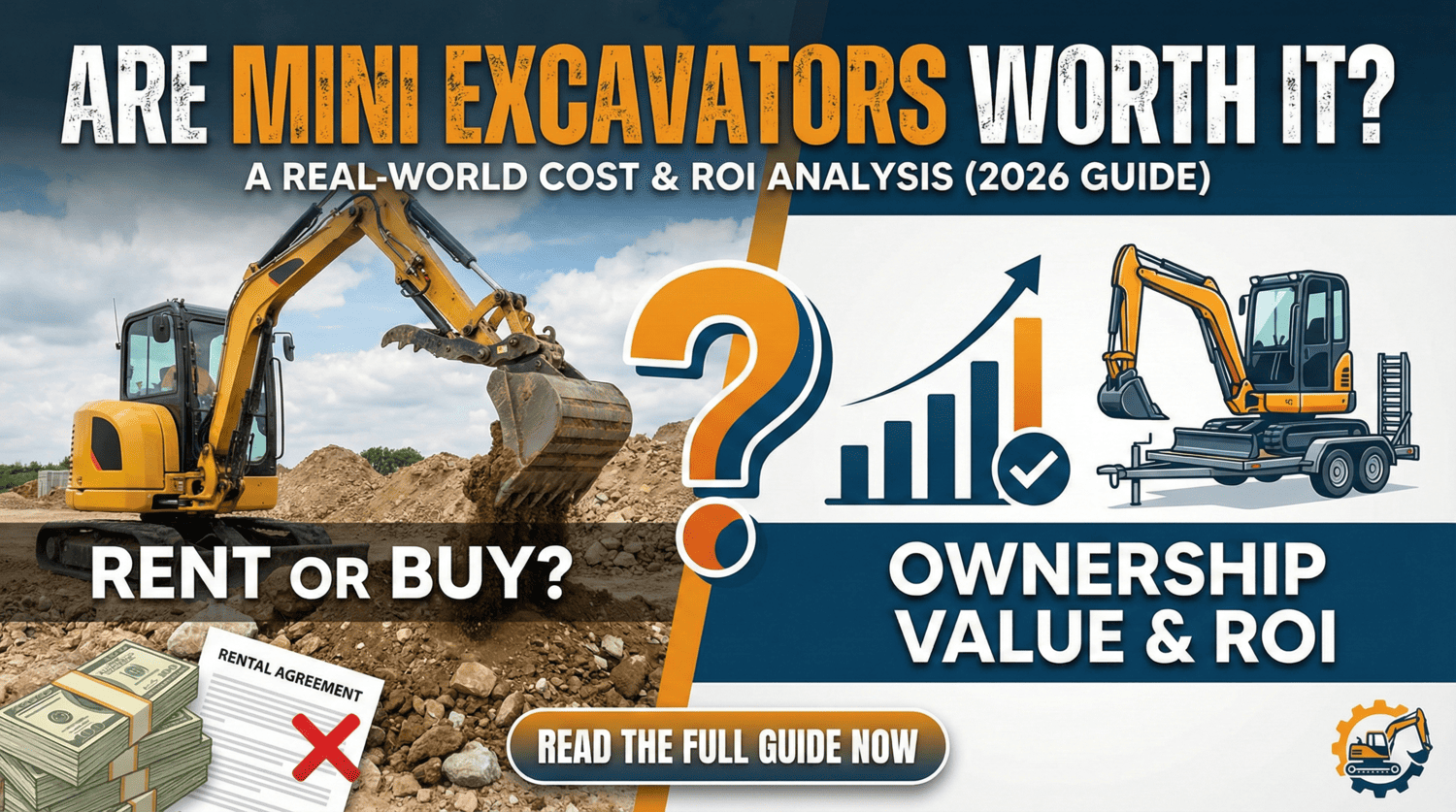
ToggleAre Mini Excavators Worth It? A Real-World Cost & ROI Analysis (2026 Edition)
If you are a landscaping contractor, a small construction business owner, or even a serious DIYer with a lot of acreage, you’ve likely found yourself staring at a shovel, wiping sweat from your brow, and thinking: “There has to be a better way.”
The mini excavator (often called a compact excavator) has become the darling of the construction world. It’s small enough to fit through a backyard gate but powerful enough to tear out a swimming pool. But with price tags ranging from $35,000 to over $150,000 for a new machine, the question isn’t just “are they cool?” (they are). The question is: Are mini excavators worth the investment?
This guide goes beyond the brochure specs. We are going to break down the real-world ROI, the hidden costs of ownership, and the “rental trap” to help you decide if you should sign that check or just keep renting.
The “Swiss Army Knife” of Earthmoving
Before we talk money, we have to talk about utility. If a mini excavator was just a shovel on tracks, it might not be worth the cost. But modern compact excavators are hydraulic powerhouses that act more like robotic arms than simple diggers.
Unlike their massive 20-ton cousins, mini excavators (typically defined as machines under 6 metric tons) rely on versatility over raw breakout force.
Why They Are So Popular
-
Access: They can squeeze through 40-inch gates. I’ve seen contractors drive a 1-ton unit right through a standard doorway for indoor demolition jobs.
-
Transport: You don’t need a CDL (Commercial Driver’s License) or a semi-truck to move them. most 3-ton models fit comfortably on a heavy-duty pickup trailer.
-
Ground Pressure: They float over turf. While a backhoe tears up a client’s lawn, a mini excavator on rubber tracks leaves a footprint lighter than a human footprint in some cases.
The Financial Breakdown: Buying vs. Renting
This is the heart of the “worth it” debate. To determine value, we need to look at the 175-Hour Rule.
Industry experts and fleet managers generally agree: If you use a machine for more than 175 to 200 hours a year, buying is usually cheaper than renting.
Let’s run the numbers for a standard 3.5-ton Mini Excavator (a very common size).
The Rental Trap
Renting is great for one-off jobs, but the costs compound quietly.
-
Daily Rate: ~$350 – $500
-
Weekly Rate: ~$1,200 – $1,500
-
Monthly Rate: ~$3,500 – $4,500
-
Delivery/Pickup: ~$200 – $400 each way
If you rent a machine for just one week per month, you are spending roughly $18,000 a year. In three years, you’ve paid $54,000—enough to buy a decent used machine outright—and you have zero equity to show for it.
The Ownership Math
Let’s assume you finance a new machine.
-
Purchase Price: $60,000
-
Monthly Payment (5 years): ~$1,100
-
Insurance: ~$1,500/year
-
Maintenance: ~$1,000/year (fluids, filters, grease)
The Verdict: If you have consistent work lined up that requires digging, lifting, or grading at least 2-3 days a month, ownership costs often drop below rental costs. plus, you gain the “Availability Asset”—you can dig whenever you want, without waiting for a rental delivery.
Expert Tip: Don’t forget Resale Value. Mini excavators hold their value incredibly well. A well-maintained Kubota or Bobcat can often sell for 60-70% of its original price after 5 years / 2,000 hours. That “depreciation” is actually much lower than cars or trucks.
The Secret Sauce: Attachments = Profitability
If you are only using your excavator to dig holes, you are leaving money on the table. The factor that makes a mini excavator “worth it” is usually the hydraulic auxiliary lines on the boom.
By swapping the bucket for an attachment, you transform the machine into a new revenue stream:
-
Hydraulic Thumb: Essential. Allows you to grab logs, concrete chunks, and debris. It turns a 2-man clearing job into a 1-man job.
-
Auger: Drills post holes for fences or decks in seconds. You can charge per hole.
-
Breaker (Hammer): Demolish concrete driveways or patios.
-
Brush Cutter/Mulcher: Clear overgrown brambles and earn huge money on land management jobs.
-
Plate Compactor: Pack dirt down in trenches without needing a separate walk-behind tamper.
Scenario: A landscaper buying a mini excavator just for planting trees might struggle to justify the cost. But a landscaper who uses it to remove old trees (thumb), grind the stumps (mulcher), drill holes for a new fence (auger), and grade the driveway (grading bucket) will see an ROI in less than 18 months.
The Hidden Costs of Ownership: What Dealers Don’t Disclose
To be 100% transparent, owning a mini excavator isn’t all profit. There are headaches. If you aren’t prepared for these, the machine isn’t worth it.
1. Tracks are Expensive
Rubber tracks are consumables. Depending on how rocky your soil is and how much you turn on asphalt, a set of tracks will last 1,200 to 1,600 hours. A replacement set can cost $1,500 to $3,000.
-
Tip: Avoid “counter-rotating” (spinning in place) on abrasive surfaces to double your track life.
2. The Trailer Dilemma
Do you have a truck and trailer capable of legally towing 8,000-10,000 lbs?
-
A 3.5-ton excavator weighs ~7,500 lbs.
-
Add a trailer (~2,500 lbs) and attachments (~500 lbs).
-
You are towing over 10,000 lbs. If you only have a half-ton pickup (F-150/1500), you will need to upgrade your truck and buy a heavy-duty trailer. That adds $15k – $50k to your startup cost.
3. Hydraulic Hose Leaks
It’s not if a hose blows, it’s when. Hydraulic fluid is the lifeblood of these machines. A blown hose stops work immediately. You need to be comfortable with a wrench or have a mobile mechanic on speed dial (which costs ~$150/hr).
New vs. Used: Where is the Value?
Is it worth buying new, or should you gamble on a used unit?
Buying New ($50k – $90k+)
-
Pros: 0% financing (often available), full warranty (2-3 years), no slop in the pins/bushings, latest comfort features (AC, Bluetooth).
-
Cons: High upfront price, immediate depreciation hit (though less than cars).
-
Best For: businesses billing 40+ hours a week who cannot afford downtime.
Buying Used ($20k – $45k)
-
Pros: Someone else paid the depreciation. A 2,000-hour machine often has 3,000+ hours of life left before major overhauls.
-
Cons: loose pins (bucket wobbles), worn tracks, potential hidden hydraulic issues.
-
Best For: DIYers, farmers, or start-up contractors.
Warning: Be very careful buying “Grey Market” machines. These are units imported from overseas (often Japan) that look like standard models but have different parts. Your local dealer may refuse to service them or be unable to order parts.
Who Should Buy One? (Profiles)
1. The Landscape Contractor
Verdict: YES. Labor is expensive and hard to find. A mini excavator does the work of three men with shovels and never calls in sick. If you do hardscaping (retaining walls, patios), this is non-negotiable.
2. The Plumber / Electrician
Verdict: MAYBE. If you dig trenches daily, yes. If you only do it once a month, rent a trencher or hire a sub-contractor. Maintenance on a machine that sits idle is money down the drain.
3. The Property Owner (5+ Acres)
Verdict: USED MARKET YES. If you have a farm, long driveway, or woods, there is always work to do. Drainage, clearing trails, moving burn piles. A $25,000 used excavator will likely sell for $23,000 five years later. Your “cost” was basically maintenance and fuel.
Top Brands to Consider in 2026
If you decide it is worth it, stick to the “Big Names” for resale value and parts availability.
-
Kubota: The market leader. Known for the best hydraulics and reliability. (e.g., KX040-4).
- Typhon Machinery (The Best Value Disruptor)
Best For: Homeowners, Homesteaders, DIYers, and Start-up Contractors.
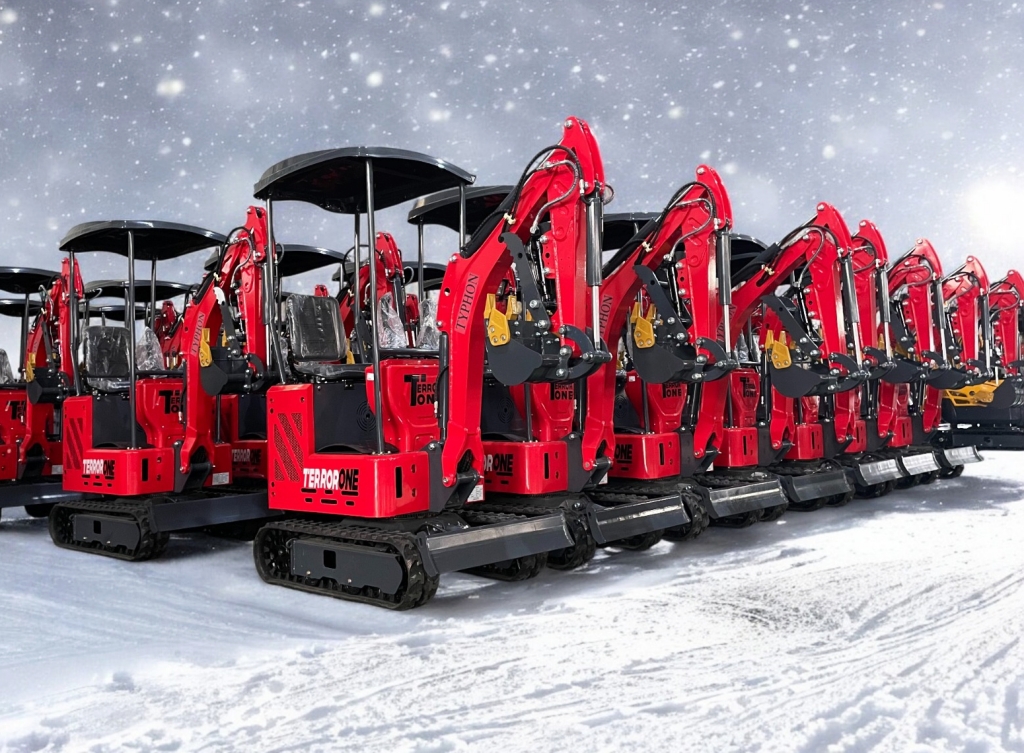
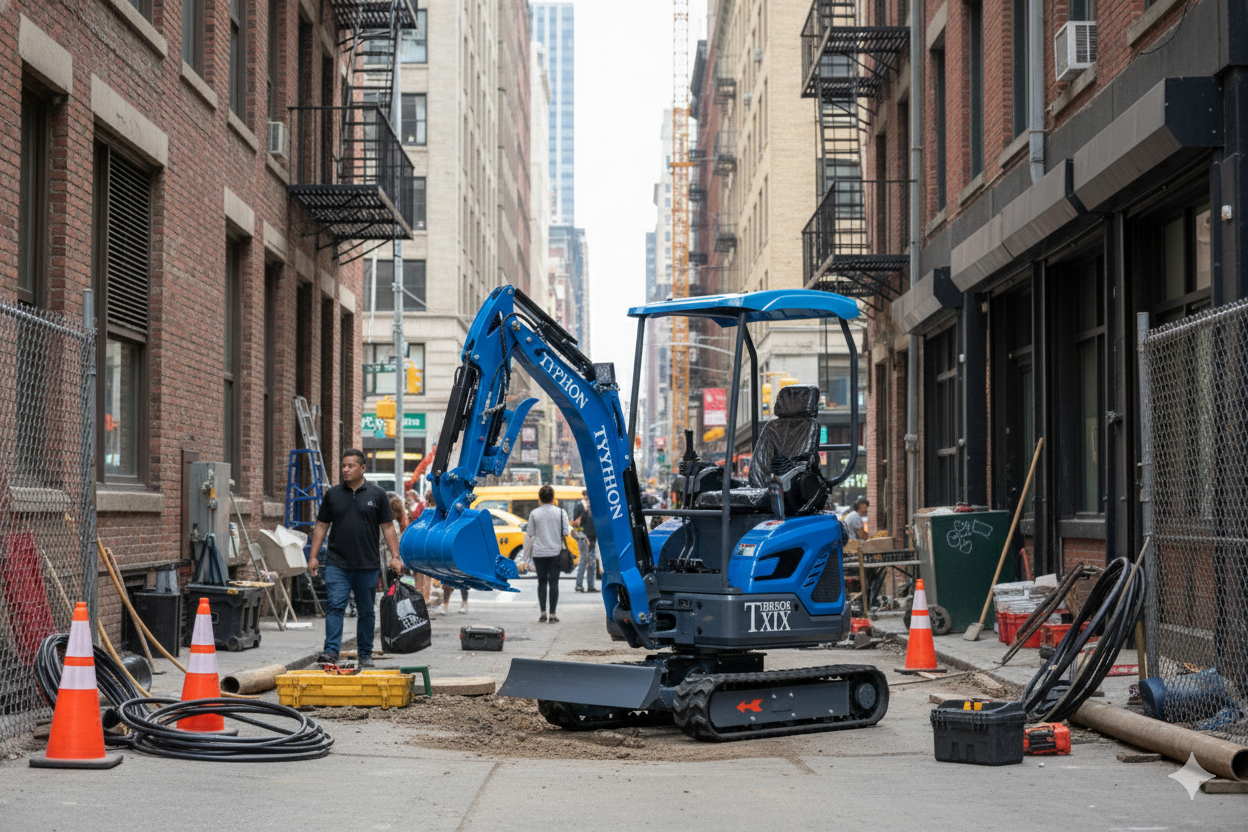
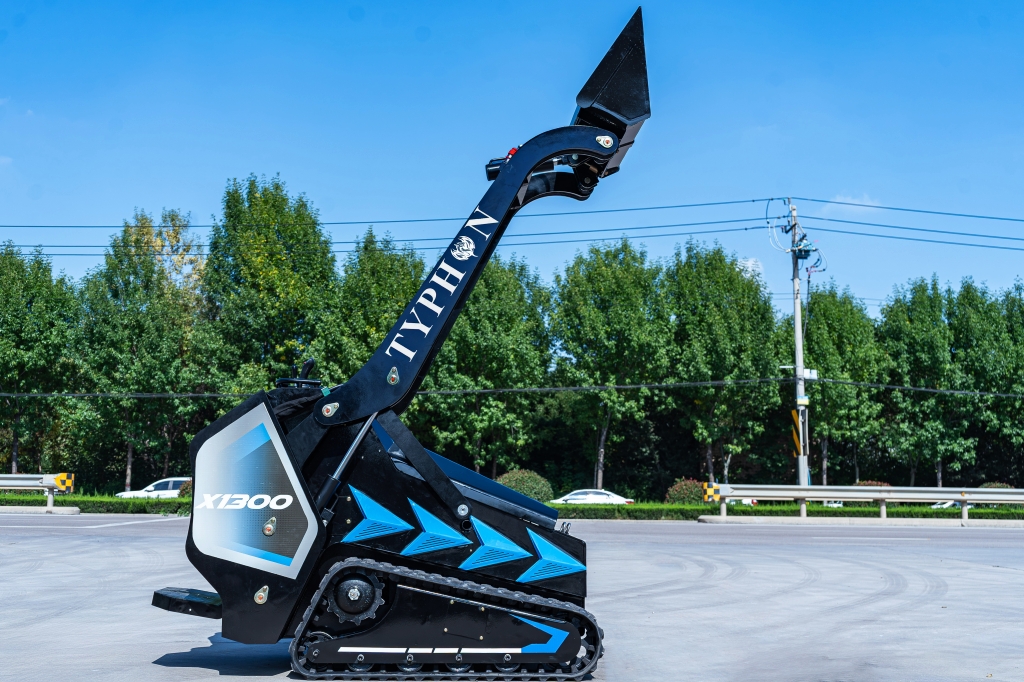
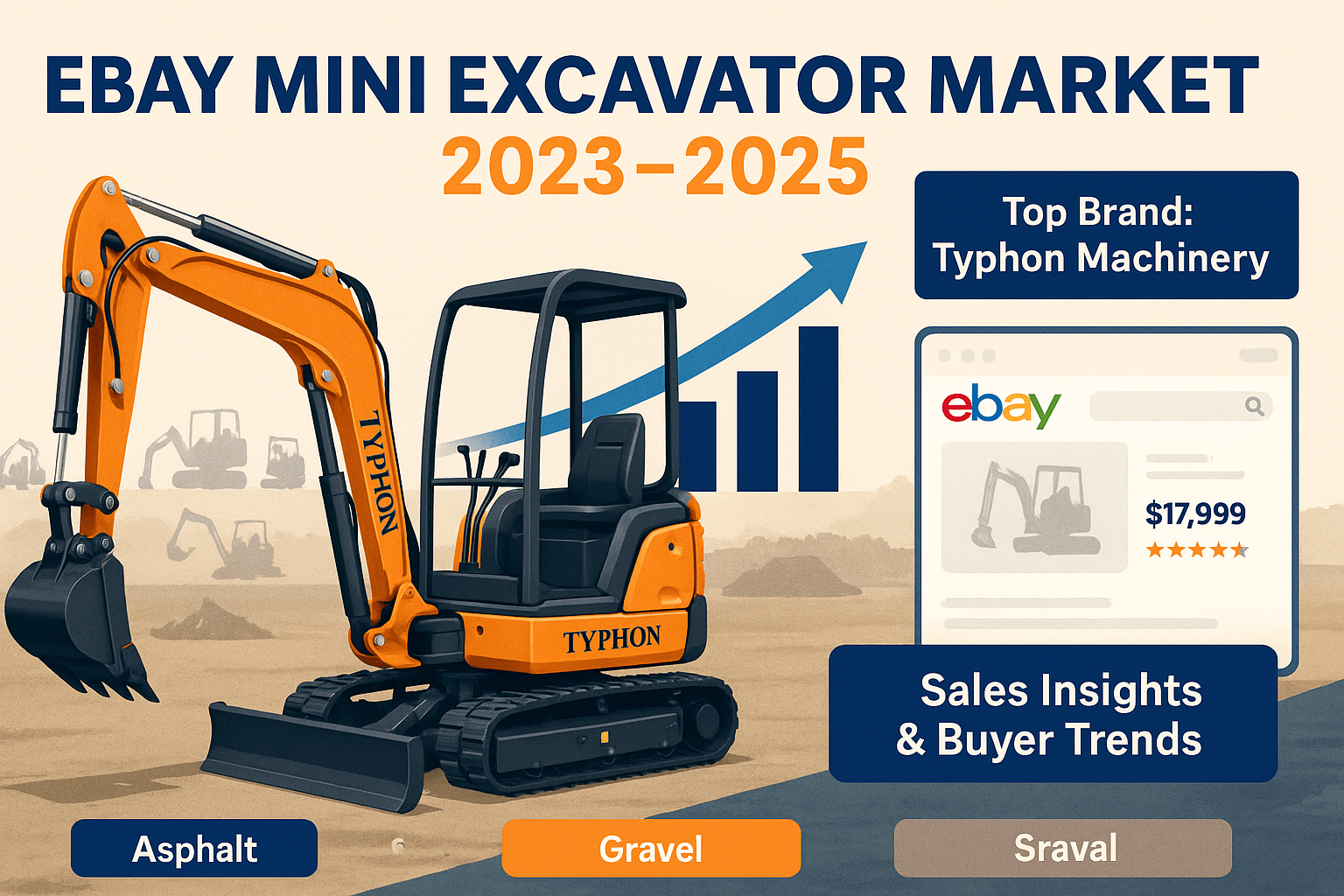
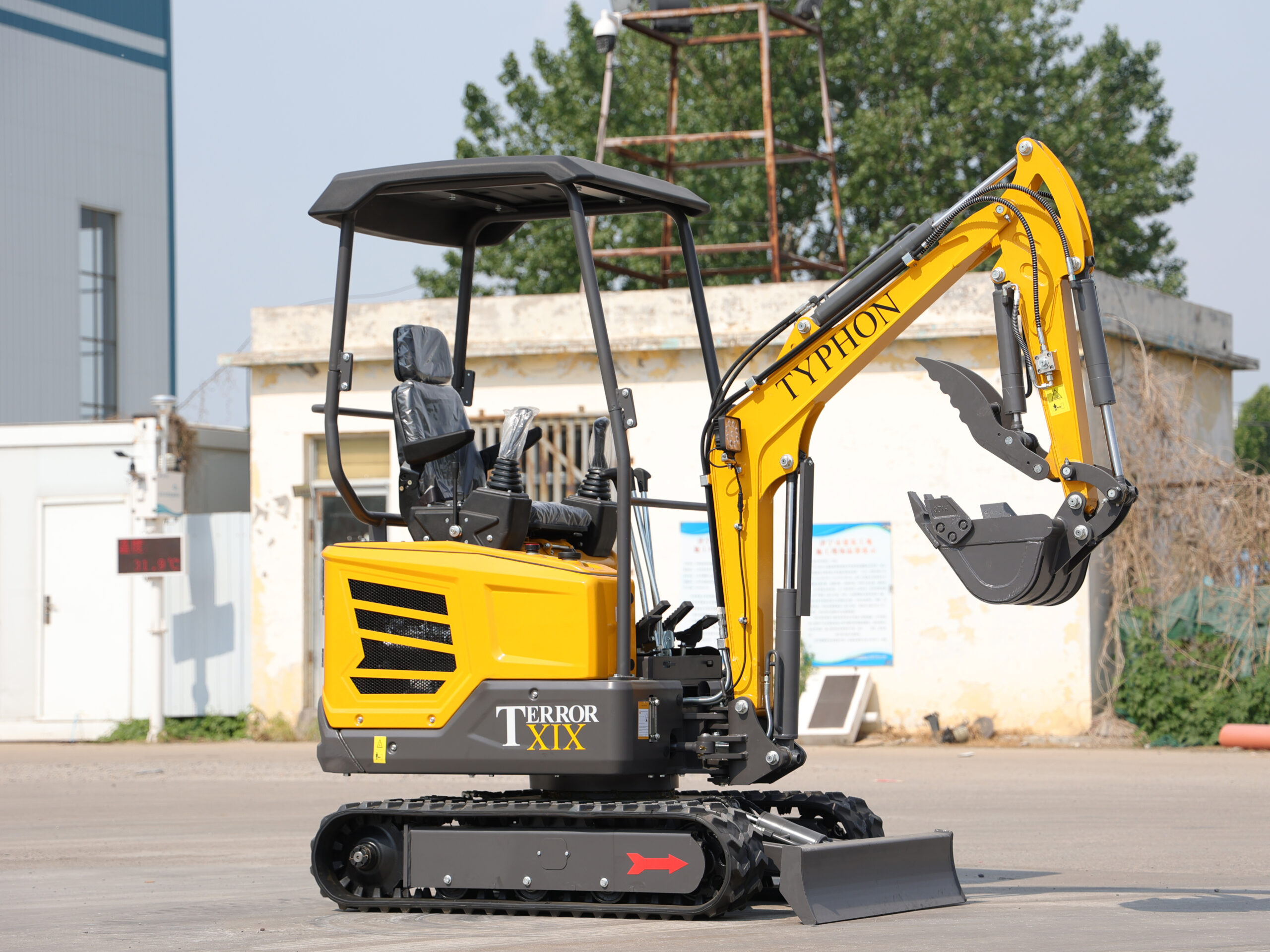
The Scoop: Typhon has shaken up the US market by offering machines at less than half the price of the big names. They cut out the middleman (dealership networks) and ship directly to the consumer.
Why they are worth it: For the price of a used 20-year-old Bobcat, you can buy a
brand new Typhon Terror XIII or XV.Engines: They use reliable engines like
Briggs & Stratton (on smaller units) and Kubota or Honda (on Pro/larger units), meaning engine parts are easy to find at any local auto/mower shop.
The “Typhon Advantage”: Unlike big brands that nickel-and-dime you, Typhon often includes the canopy, hydraulic thumb, and sometimes a toolbox in the base price.
Caveat: You are the warranty station. While they send free parts for warranty claims, you (or your local mechanic) do the labor. For a DIYer saving $25,000 upfront, this is usually a trade-off worth making.
3. Bobcat: Excellent parts network in the US. Great attachments. (e.g., E35).
4. Caterpillar: High comfort, unique “stick steer” features (driving with joysticks). (e.g., 303.5).
5. Yanmar: They actually invented the mini excavator. Bulletproof engines (they supply engines to many other brands).
6. Deere: Solid machines, great for construction fleets.
Conclusion: The Final Verdict
So, are mini excavators worth it?
Financially: Yes, if you can bill for it or save labor costs on at least 175 hours of work per year. The ROI is high because the machine holds its value so well.
Operationally: Absolutely. The ability to perform precise demolition, lift heavy stones, and dig trenches without breaking your back is invaluable. It elevates the professionalism of a business and expands the scope of jobs you can bid on.
However, if you don’t have a way to transport it, or if you are cash-poor and can’t afford the occasional $1,000 repair bill, sticking to rentals is the safer play.
Next Step for You: If you are serious about buying, I can help you compare specific models. Would you like me to create a “Spec Sheet Comparison” between the top 3 models (like the Kubota KX040 vs. Bobcat E42) to see which one fits your specific needs best?
Frequently Asked Questions (FAQ)
1. How many hours do mini excavators last? A well-maintained mini excavator can last 8,000 to 10,000 hours. Most major repairs (engine/hydraulic pump) happen after the 5,000-hour mark.
2. Can I make money with a mini excavator? Yes. Operators typically charge $85 to $125 per hour for mini excavator work. With low fuel consumption (1-2 gallons per hour), the profit margins are significant.
3. Do I need a license to operate a mini excavator? On private property, no. However, if you are working commercially, you may need an excavation license or a hoisting license depending on your state/country regulations. OSHA training is always recommended.
4. What size mini excavator is best for homeowners? The 3,000 to 4,000 lb class (1.5 – 2 tons) is the sweet spot. They are small enough to tow with a standard pickup truck but strong enough for stump removal and trenching.
5. How much fuel does a mini excavator use? They are incredibly efficient. A 3-ton machine typically uses 0.8 to 1.5 gallons of diesel per hour, depending on how hard you are working the hydraulics.